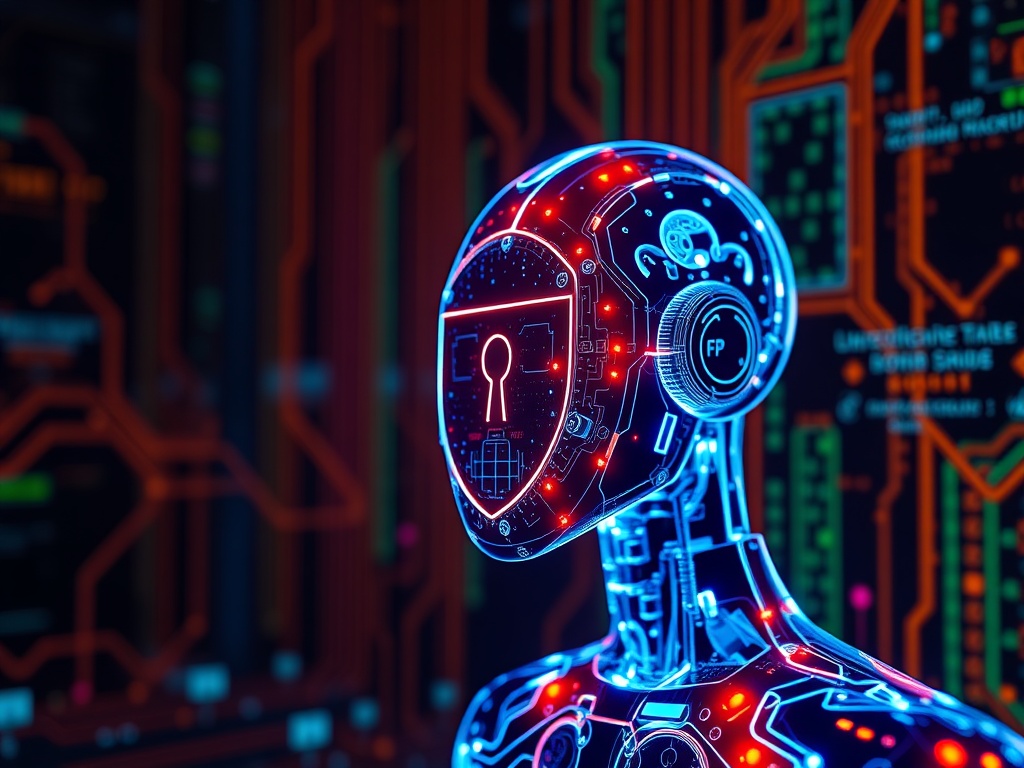
AI-Powered Cybersecurity Detection
In an era defined by ubiquitous digital connectivity, the landscape of cyber threats has become increasingly sophisticated and relentless. Organizations worldwide face a deluge of attacks ranging from insidious phishing campaigns and debilitating ransomware to advanced persistent threats (APTs) and zero-day exploits. Traditional, signature-based cybersecurity defenses, while foundational, often struggle to keep pace with the rapid evolution and sheer volume of these threats. This escalating challenge has pushed the cybersecurity industry to seek more intelligent, adaptive solutions. Enter Artificial Intelligence (AI) and Machine Learning (ML), technologies poised to transform how we detect, analyze, and neutralize cyber threats, offering a proactive shield in an ever-hostile digital environment.
The Evolving Cyber Threat Landscape and Traditional Defenses
The digital realm is a constant battleground, with cyber adversaries growing more agile and their attack vectors more complex each day. We are witnessing a surge in polymorphic malware that changes its signature to evade detection, fileless attacks that operate purely in memory, and sophisticated social engineering tactics that bypass technological safeguards entirely. Traditional cybersecurity measures, primarily reliant on known signatures and predefined rules, are increasingly overwhelmed. These systems excel at identifying previously cataloged threats but falter against novel, unknown, or rapidly mutating attacks. The sheer volume of network traffic, user activities, and log data generated by modern enterprises creates an insurmountable task for human analysts, leading to alert fatigue, missed critical incidents, and extended dwell times for intruders. This gap between the speed and ingenuity of attackers and the reactive nature of conventional defenses underscores an urgent need for a paradigm shift towards more intelligent, predictive, and autonomous security frameworks that can learn and adapt in real-time.
How AI and Machine Learning Enhance Detection Capabilities
AI and Machine Learning provide the much-needed intelligence layer to cybersecurity, shifting the focus from reactive defense to proactive detection and prevention. At their core, these technologies enable systems to learn from vast datasets, identify intricate patterns, and make informed decisions without explicit programming. Supervised learning algorithms are trained on labeled datasets of known malicious and benign activities, allowing them to classify new data with high accuracy. Unsupervised learning, on the other hand, excels at anomaly detection, identifying unusual behaviors or data points that deviate from established norms, crucial for spotting zero-day threats. Reinforcement learning can further empower security systems to learn optimal strategies for threat containment and response through trial and error. By continuously analyzing colossal amounts of data, AI-driven systems can establish baselines of normal network and user behavior, recognize subtle indicators of compromise, and pinpoint deviations that signal a potential attack far more rapidly and accurately than human analysts ever could. This capability is foundational to modern threat intelligence and incident response.
- Real-time Threat Identification: AI algorithms can process and analyze network traffic, endpoint data, and user activity logs instantaneously, identifying suspicious patterns and potential threats as they emerge, significantly reducing the window of opportunity for attackers.
- Predictive Analysis: By leveraging historical data and current threat intelligence, AI can anticipate future attack vectors and vulnerabilities, allowing organizations to implement preemptive defenses and fortify their systems before an attack even materializes.
- Reduced False Positives: Advanced machine learning models can distinguish between genuine security threats and benign anomalies with greater precision than traditional rule-based systems, drastically cutting down on the volume of irrelevant alerts that overwhelm security teams.
- Automated Response Initiation: Beyond detection, AI can be configured to trigger automated responses, such as isolating infected endpoints, blocking malicious IP addresses, or initiating remediation scripts, thereby accelerating incident response and minimizing potential damage.
Key AI Applications in Cybersecurity Detection
The practical applications of AI in cybersecurity detection span across various critical layers of an organization's digital infrastructure, enhancing visibility and defensive posture. In Network Intrusion Detection Systems (NIDS), AI algorithms scrutinize network traffic for anomalous behaviors, malware signatures, and unauthorized access attempts, identifying sophisticated threats that might bypass traditional firewalls. Endpoint Detection and Response (EDR) solutions leverage AI to monitor endpoint activities—processes, file modifications, network connections—to detect suspicious sequences of events indicative of malware execution or insider threats. User and Entity Behavior Analytics (UEBA) systems are powered by AI to profile the normal behavior of individual users and entities, flagging deviations that could indicate compromised accounts, privilege escalation, or malicious insider activity. AI is also instrumental in advanced malware analysis, enabling systems to classify new malware variants, understand their behavior, and even predict their next moves, even for polymorphic and obfuscated samples. Furthermore, AI significantly bolsters phishing and spam detection by analyzing email content, headers, sender reputation, and embedded links to identify and quarantine malicious communications before they reach end-users, protecting against one of the most common initial attack vectors.
Advantages of AI-Driven Detection over Traditional Methods
The shift towards AI-driven detection represents a monumental leap forward from the limitations of traditional cybersecurity approaches, offering distinct advantages that fundamentally reshape an organization's defense capabilities. One of the most significant benefits is the unparalleled speed and scale at which AI can operate. Unlike human analysts, AI systems can process petabytes of data from countless sources—network logs, endpoint telemetry, cloud environments, and threat intelligence feeds—in real-time, identifying subtle indicators of compromise that would be impossible for humans to discern within a reasonable timeframe. This speed dramatically reduces the mean time to detect (MTTD) and mean time to respond (MTTR) to incidents. Furthermore, AI models possess an inherent adaptability; they continuously learn and evolve from new data and emerging threat patterns, automatically updating their detection capabilities without requiring constant manual rule adjustments. This proactive threat hunting capability allows AI to identify previously unknown threats (zero-days) and sophisticated attacks that cleverly evade signature-based defenses. The automation inherent in AI also significantly reduces human error and fatigue, freeing up valuable security personnel from monotonous tasks to focus on complex investigations and strategic planning. Ultimately, AI-driven detection leads to vastly improved accuracy and a significant reduction in false positives, ensuring that security teams can concentrate their efforts on genuine, high-priority threats rather than chasing down benign anomalies.
Challenges and Future Trends in AI Cybersecurity Detection
While AI offers transformative potential for cybersecurity detection, its implementation is not without challenges. A primary concern revolves around data quality and bias; AI models are only as effective as the data they are trained on. Incomplete, noisy, or biased datasets can lead to flawed models that either miss genuine threats or generate excessive false positives. The emerging field of adversarial AI presents another significant hurdle, where attackers actively seek to manipulate or "poison" AI models to evade detection or even cause misclassifications, essentially weaponizing AI against itself. The "black box" nature of many complex AI models also poses an explainability challenge (XAI), making it difficult for human analysts to understand why a particular threat was flagged, hindering trust and incident response. Moreover, the computational resources required to train and deploy sophisticated AI models can be substantial, especially for smaller organizations. Despite these hurdles, the future of AI in cybersecurity detection is incredibly promising and dynamic. We anticipate further advancements in federated learning, allowing multiple organizations to collaboratively train AI models without sharing sensitive raw data, thus enhancing collective defense. The impact of quantum computing, while still nascent, looms large, potentially both breaking current encryption standards and offering unprecedented computational power for AI-driven defense. The integration of AI with Security Orchestration, Automation, and Response (SOAR) platforms will lead to increasingly autonomous cyber defense systems capable of detecting, analyzing, and responding to threats with minimal human intervention, moving towards self-healing and self-defending networks. These innovations promise a more resilient and proactive digital security posture for the future.
Conclusion
Artificial Intelligence is not merely an enhancement but a fundamental shift in how we approach cybersecurity detection. As cyber threats grow in volume, velocity, and sophistication, AI and machine learning provide the essential intelligence, speed, and adaptability required to stay ahead of malicious actors. From identifying zero-day exploits and sophisticated malware to predicting future attack vectors and autonomously responding to incidents, AI-powered systems are revolutionizing our ability to protect critical digital assets. While challenges such as data quality and adversarial AI persist, the continuous advancements in AI research and deployment promise an even more robust and proactive defense landscape. AI empowers human security analysts, freeing them from mundane tasks and equipping them with unparalleled insights, ultimately fostering a more resilient and secure digital future. Embrace the power of intelligent defense. Explore how AI Insights can further illuminate your understanding of cutting-edge AI applications in cybersecurity.



Aucun commentaire:
Enregistrer un commentaire