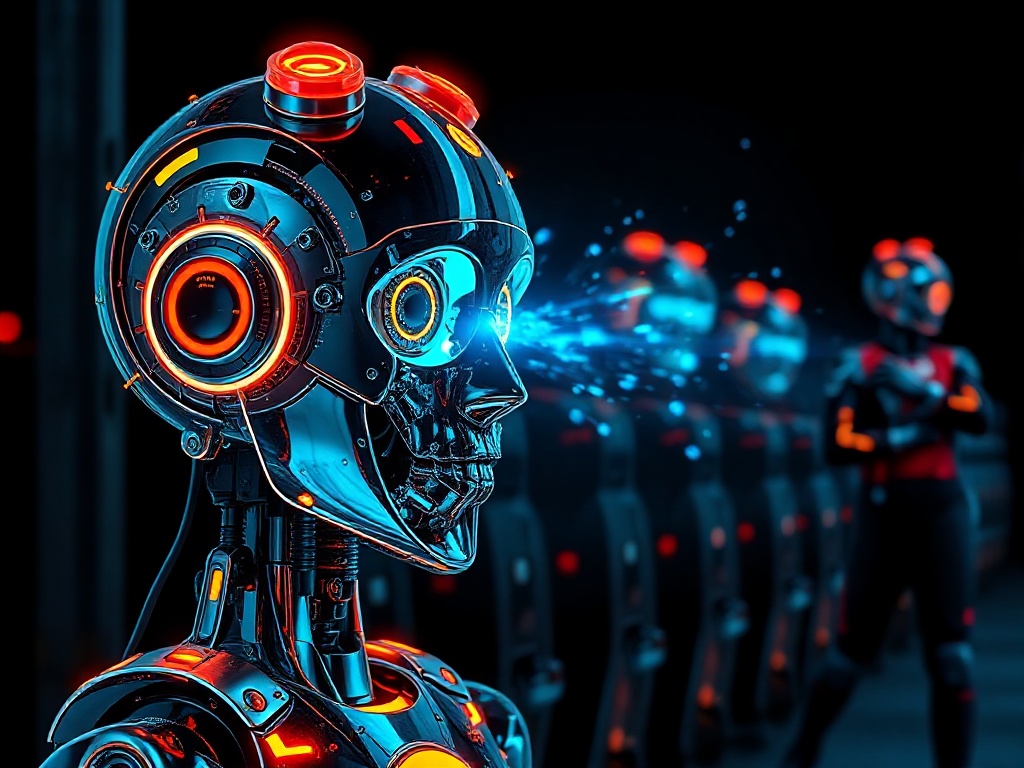
AI Impact on Jobs Automation: Navigating the Future Workforce Landscape
The relentless march of artificial intelligence (AI) is reshaping industries and economies at an unprecedented pace. From sophisticated algorithms driving machine learning models to the complex neural networks powering deep learning, AI is no longer a futuristic concept but a present-day reality profoundly influencing our daily lives and, critically, our livelihoods. One of the most pressing questions arising from this technological revolution is the AI impact on jobs automation. Will AI lead to widespread unemployment, or will it usher in an era of enhanced productivity and new opportunities? Understanding this nuanced interplay between AI, automation, and the human workforce is crucial for individuals, businesses, and policymakers alike as we navigate this transformative technological trend.
The Automation Revolution: Beyond Repetitive Tasks
Historically, automation has been associated with the mechanization of repetitive, manual tasks, primarily impacting blue-collar jobs in manufacturing and agriculture. However, the current wave of AI-driven automation represents a significant paradigm shift. Modern artificial intelligence, powered by advanced machine learning and deep learning techniques, is capable of performing cognitive tasks that were once considered exclusively human domains. This includes data analysis, pattern recognition, decision-making based on complex datasets, natural language processing, and even creative functions like generating text or designing prototypes. As AI systems become more sophisticated, their ability to take over routine and predictable cognitive tasks across various sectors intensifies.
This evolution means that jobs traditionally considered safe from automation, such as those in finance, legal services, customer service, and even certain aspects of healthcare, are now within AI's purview. AI algorithms can review contracts, diagnose medical conditions, provide personalized financial advice, and handle customer queries with remarkable efficiency and accuracy. This expansion of automation's scope introduces a new layer of complexity to the discussion about job displacement and the future of work. It compels us to rethink the very definition of "skill" and "value" in a world increasingly augmented by intelligent machines, pushing the boundaries of what technology trends can achieve in the professional sphere.
Job Displacement vs. Job Augmentation
The discourse surrounding AI's impact on employment often polarizes into two main camps: those who foresee mass job displacement and those who predict widespread job augmentation. The reality is likely a blend of both, depending on the industry, the specific role, and the adaptability of the workforce. Certain jobs, especially those characterized by highly repetitive, data-intensive, or predictable tasks, are undeniably at a higher risk of full or partial automation.
However, AI also serves as a powerful tool for job augmentation, enhancing human capabilities rather than replacing them entirely. In many scenarios, AI systems can take over the mundane or complex analytical aspects of a job, freeing up human workers to focus on tasks requiring creativity, critical thinking, emotional intelligence, and interpersonal skills – areas where AI still lags significantly. This collaboration between human and artificial intelligence can lead to increased productivity, better decision-making, and more fulfilling work experiences. The key lies in understanding how to leverage AI to empower the workforce, rather than solely seeing it as a replacement mechanism.
- Jobs at Higher Risk of Displacement: Roles involving routine data entry, basic customer service (call center operators), administrative support, assembly line workers, truck drivers (with autonomous vehicles), and some forms of diagnostic analysis.
- Jobs Experiencing Significant Augmentation: Doctors (AI assists with diagnosis), financial analysts (AI processes vast datasets), graphic designers (AI generates initial concepts), software developers (AI writes boilerplate code), and educators (AI personalizes learning paths).
- Emergence of New Roles: The development, deployment, and maintenance of AI systems are creating entirely new categories of jobs, such as AI trainers, prompt engineers, ethical AI specialists, data scientists, machine learning engineers, and AI-powered system maintenance technicians.
- Shift in Required Skills: The demand for purely technical skills is evolving towards a greater need for "soft skills" like creativity, critical thinking, complex problem-solving, emotional intelligence, and adaptability, alongside digital literacy and an understanding of AI systems.
The Rise of New Roles: AI as a Job Creator
While the focus often gravitates towards job displacement, it's equally important to acknowledge AI's significant role as a job creator. The entire ecosystem surrounding artificial intelligence, machine learning, and deep learning technologies necessitates a vast array of new skills and specialized roles that simply didn't exist a decade ago. Developing, deploying, managing, and refining AI systems requires human expertise at every stage, from conceptualization to ongoing maintenance and ethical oversight. This creates a burgeoning demand for professionals who can build, understand, and interact with these intelligent systems.
Consider roles such as AI researchers and developers, who push the boundaries of what AI can achieve; data scientists and machine learning engineers, who build and train the algorithms; and prompt engineers, who specialize in crafting effective instructions for generative AI models. Beyond the core technical roles, there's a growing need for AI ethicists to ensure fairness and transparency, AI trainers to refine model outputs, and user experience designers to create intuitive interfaces for AI-powered tools. Furthermore, as AI permeates every industry, there's an increasing demand for professionals who can integrate AI solutions into existing business processes, manage AI projects, and educate others on its capabilities. This wave of innovation, driven by cutting-edge technology trends, ensures that while some doors close, many new and exciting career paths emerge.
Reskilling and Upskilling: Navigating the Future Workforce
To effectively navigate the seismic shifts brought about by AI automation, a concerted global effort in reskilling and upskilling is paramount. The traditional education model, which often prepares individuals for specific, static roles, is no longer sufficient in an era of rapid technological change. Both individuals and organizations must embrace a mindset of continuous learning, recognizing that adaptability and the acquisition of new competencies are key to remaining relevant in the evolving job market. This isn't merely about learning to code or understanding machine learning algorithms; it's about developing a broader understanding of how AI functions, its implications, and how to collaborate effectively with intelligent systems.
Governments, educational institutions, and corporations all have a critical role to play. Governments can invest in robust public education programs, incentivize lifelong learning, and provide support for displaced workers to transition into new careers. Educational institutions must revamp curricula to incorporate digital literacy, AI fundamentals, and future-proof skills like critical thinking, creativity, and emotional intelligence. Corporations, in turn, need to invest heavily in internal training programs, foster a culture of continuous learning, and provide pathways for their existing workforce to adapt to AI-driven changes. The onus is also on individuals to proactively seek out learning opportunities, whether through online courses, certifications, or vocational training, ensuring they are equipped for the jobs of tomorrow in the age of artificial intelligence and machine learning.
Ethical Considerations and Policy Frameworks
Beyond the immediate economic implications, the widespread impact of AI on jobs automation raises profound ethical and societal questions that demand thoughtful consideration and proactive policy frameworks. As artificial intelligence becomes more integrated into the fabric of our economy, concerns about job security, income inequality, and the potential for a "two-tiered" workforce – those who command AI and those who are commanded by it – become increasingly pertinent. Ensuring a just transition for workers whose roles are displaced by automation is a moral imperative, requiring robust social safety nets and innovative approaches to economic security.
Discussions around universal basic income (UBI) gain traction in this context, positing it as a potential mechanism to cushion the economic blow of widespread automation. Furthermore, policies must address issues of algorithmic bias, data privacy, and accountability within AI systems to prevent the exacerbation of existing societal inequalities. Regulators face the challenge of fostering innovation in deep learning and other AI technologies while simultaneously safeguarding human welfare and ensuring ethical deployment. Striking this delicate balance requires ongoing dialogue between technologists, policymakers, labor unions, and the public to shape a future where the benefits of AI are widely shared, and its potential harms are mitigated. Establishing clear guidelines and ethical principles for AI development and deployment is crucial for navigating these complex technology trends responsibly and humanely.
Conclusion
The AI impact on jobs automation is undeniably one of the most significant challenges and opportunities of our time. While artificial intelligence, machine learning, and deep learning will inevitably automate certain tasks and displace some jobs, they are simultaneously creating new roles, augmenting human capabilities, and driving unprecedented productivity gains. The future of work is not one of human versus machine, but rather human with machine. Successfully navigating this transformation requires a proactive approach centered on continuous learning, strategic reskilling and upskilling initiatives, and the development of robust ethical guidelines and policy frameworks. By embracing adaptability and fostering collaboration between humans and AI, we can harness the power of these advanced technology trends to build a more prosperous and equitable future for all. Stay informed on the latest developments and explore more insights into the evolving landscape of artificial intelligence right here at AI Insights.



Aucun commentaire:
Enregistrer un commentaire