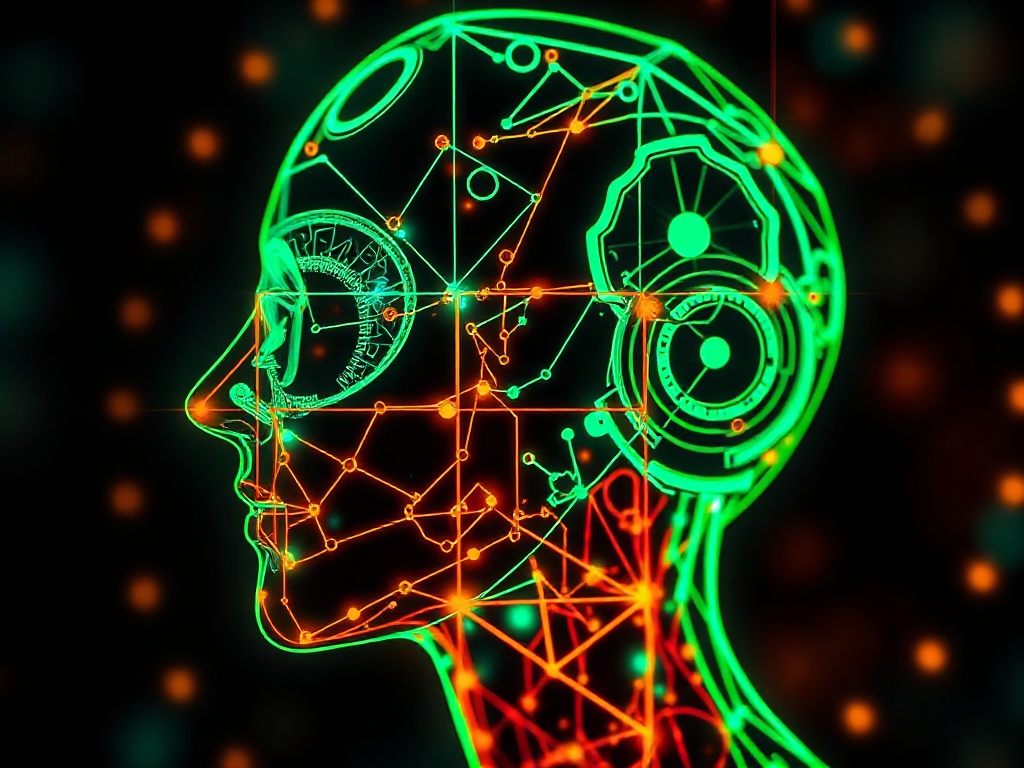
Generative AI: Unleashing New Horizons in Creative Industries
The landscape of creativity is undergoing a profound transformation, driven by the rapid advancements in artificial intelligence. Among these innovations, generative AI stands out as a particularly powerful force, capable of producing novel content across various mediums, from breathtaking visual art and intricate musical compositions to compelling narratives and innovative product designs. This revolutionary technology is not merely automating tasks; it is actively participating in the creative process, blurring the lines between human and machine ingenuity. As AI Insights delves into the heart of this paradigm shift, we explore how generative AI is empowering creators, redefining artistic boundaries, and setting new benchmarks for innovation in the creative industries.
Redefining Artistic Expression and Visual Arts
Generative AI tools are fundamentally altering how artists conceive, create, and interact with their work. Platforms leveraging models like DALL-E, Midjourney, and Stable Diffusion enable artists to generate complex images from simple text prompts, turning abstract ideas into tangible visuals in mere seconds. This capability extends beyond mere image generation; artists are using AI to explore new aesthetics, create dynamic textures, design impossible architectures, and even animate static art. It acts as a powerful ideation partner, helping artists overcome creative blocks and experiment with styles, palettes, and compositions that might have been unattainable or too time-consuming through traditional methods. From concept art for films and video games to unique digital installations, generative AI is expanding the visual lexicon, offering artists an unprecedented degree of control and experimentation while simultaneously introducing entirely new forms of artistic expression that were previously unimaginable. This augmentation of human skill fosters an environment where innovation thrives, pushing the boundaries of what art can be.
Revolutionizing Content Creation Across Media
The impact of generative AI permeates every facet of content creation, offering transformative capabilities across diverse media. In the realm of music, AI algorithms can compose original scores, generate variations on existing themes, and even produce entire soundscapes tailored to specific moods or narratives. For writers, AI writing assistants can draft marketing copy, summarize long documents, brainstorm plot points, or even generate entire fictional passages, serving as an invaluable co-pilot in the storytelling process. In film and animation, generative AI is accelerating pre-production by creating concept art, storyboards, and even rudimentary character designs, while in post-production, it assists with visual effects, scene generation, and editing. The design industry benefits immensely, with AI generating countless iterations of logos, product designs, and architectural blueprints, optimizing for aesthetics, functionality, or user experience. This pervasive integration means that creators can now produce high-quality content faster, more efficiently, and with greater personalization than ever before, fostering an era of unparalleled creative output.
- Music Composition: AI tools create original melodies, harmonies, and even full orchestral pieces, assisting composers or generating background scores.
- Video Game Asset Generation: AI rapidly designs 3D models, textures, environments, and character variations, significantly reducing development time and costs.
- Personalized Marketing Content: Generative AI crafts tailored ad copy, visuals, and campaigns that resonate deeply with specific audience segments.
- Automated Scriptwriting Assistance: AI helps screenwriters brainstorm ideas, develop character dialogues, and even draft initial script versions or scene descriptions.
Efficiency and Personalization at Scale
One of the most significant advantages generative AI brings to creative industries is its ability to drive unprecedented levels of efficiency and personalization. By automating repetitive or time-consuming tasks, creators are liberated to focus on higher-level conceptualization and refinement. For instance, an architect can use AI to generate hundreds of building design variations based on specific parameters, allowing them to quickly identify optimal solutions without manually drawing each iteration. Similarly, marketing teams can deploy AI to create hyper-personalized ad campaigns, generating unique ad copy, images, and even video snippets tailored to individual consumer preferences at a scale that would be impossible for human teams alone. This capability not only reduces production costs and turnaround times but also allows for a deeper, more nuanced engagement with audiences. The ability to rapidly prototype, iterate, and customize content means that creative professionals can respond to market demands with agility, delivering bespoke experiences that foster stronger connections and drive greater impact across all creative endeavors.
Ethical Considerations and the Future of Human Creativity
While the opportunities presented by generative AI are vast, its integration into creative industries also raises critical ethical and philosophical questions that demand careful consideration. Issues of intellectual property and copyright are at the forefront, as AI models often train on vast datasets of existing human-created works, leading to debates over ownership and fair compensation for original artists. The potential for job displacement, particularly in roles involving repetitive creative tasks, is another significant concern that necessitates proactive strategies for reskilling and adaptation. Furthermore, the inherent biases present in training data can be perpetuated or even amplified by generative AI, leading to outputs that reinforce stereotypes or lack diverse representation. Addressing these challenges requires a concerted effort from developers, policymakers, and creative communities to establish ethical guidelines, fair usage policies, and robust frameworks for accountability. The future of human creativity will likely involve a symbiotic relationship with AI, where human oversight and ethical discernment remain paramount to ensure that technology serves to augment, rather than diminish, our creative spirit.
AI as a Creative Partner, Not a Replacement
It is crucial to frame generative AI not as a threat to human creativity, but as an advanced tool and a collaborative partner. The most compelling and impactful applications of this technology emerge when human ingenuity guides and refines AI-generated content. Artists, designers, writers, and musicians can leverage AI to accelerate ideation, explore novel aesthetics, and handle the laborious aspects of content production, freeing them to concentrate on the conceptual, emotional, and narrative core of their work. The human element—our unique ability to imbue creations with meaning, emotion, and cultural context—remains indispensable. AI can generate countless images, but a human artist chooses the one that resonates most deeply. AI can compose a melody, but a human musician crafts the arrangement that evokes a specific feeling. This partnership elevates human creativity by augmenting capabilities, fostering experimentation, and enabling creators to achieve visions that were previously beyond reach, pushing the boundaries of what is possible in the creative realm.
Conclusion
Generative AI is undeniably reshaping the creative industries, offering unprecedented tools for innovation, efficiency, and personalization. From transforming visual arts and music composition to revolutionizing content creation across all media, AI acts as a powerful catalyst, augmenting human capabilities and opening doors to entirely new forms of artistic expression. While ethical considerations surrounding copyright, bias, and job evolution must be carefully navigated, the overarching narrative is one of collaboration and enhancement. Generative AI empowers creators to push boundaries, streamline workflows, and connect with audiences in more profound ways. The future of creativity will be a dynamic interplay between human imagination and artificial intelligence, forging a new era of boundless artistic potential. Explore more about AI's impact on technology trends and deep learning at AI Insights.



Aucun commentaire:
Enregistrer un commentaire