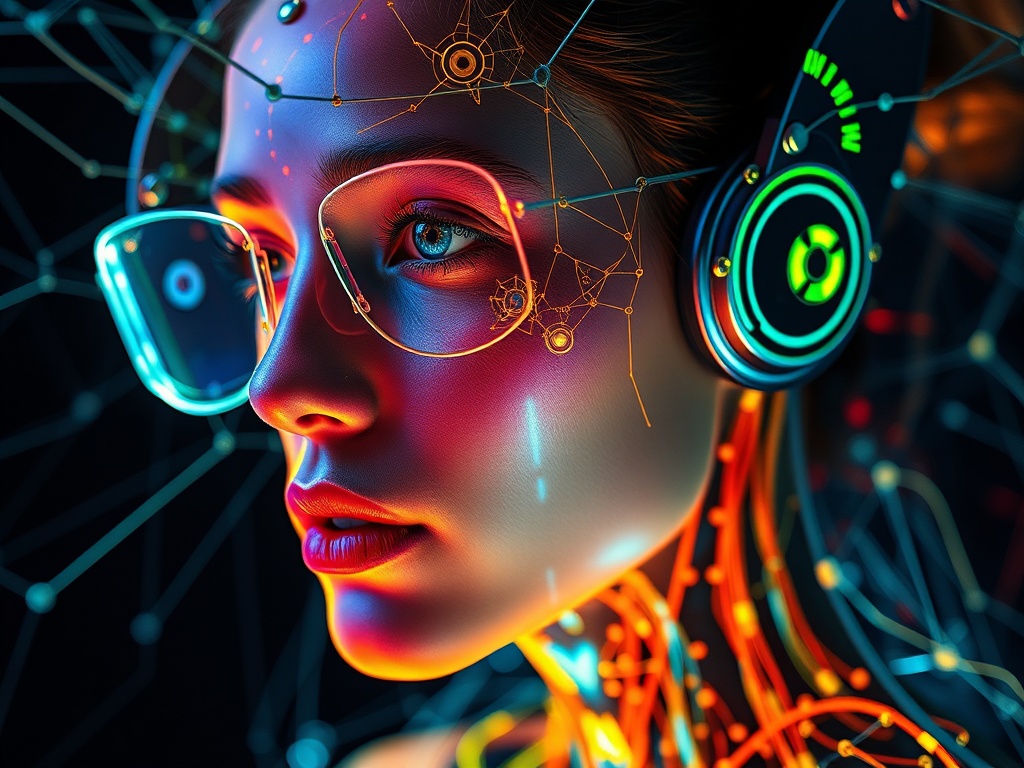
Generative AI: Reshaping Creativity Across Industries
Generative Artificial Intelligence is rapidly transforming the landscape of creative industries, moving beyond mere automation to become a true partner in the artistic process. From visual arts and music composition to sophisticated design and immersive storytelling, these powerful AI models are learning from vast datasets to produce novel, high-quality content that was once the sole domain of human imagination. This technological revolution isn't just about efficiency; it's about unlocking unprecedented avenues for innovation, challenging traditional creative workflows, and democratizing access to powerful creative tools, promising a future where human ingenuity is amplified by algorithmic artistry.
The Dawn of Algorithmic Artistry: From Pixels to Symphonies
At its core, generative AI utilizes advanced machine learning techniques, such as Generative Adversarial Networks (GANs), Variational Autoencoders (VAEs), and more recently, transformer and diffusion models, to learn intricate patterns and structures from existing data. Once trained, these models can generate entirely new outputs that mimic the style and characteristics of their training data, yet possess unique elements. Early forays into algorithmic artistry saw AI systems generate abstract visual patterns, replicate famous painting styles, or even create entirely new digital artworks that blurred the lines between human and machine creation. This marked a significant shift from AI simply analyzing or processing data to actively creating it. In music, generative AI has begun composing original pieces across various genres, from classical symphonies to electronic soundscapes, by understanding melodic structures, harmonic progressions, and rhythmic patterns. These systems can produce full musical scores, generate background music for videos, or even assist musicians in breaking creative blocks by offering novel melodic suggestions. The essence of this evolution lies in AI's capacity to augment, rather than replace, human creativity, offering a powerful co-creator to explore uncharted artistic territories.
Tools and Technologies Empowering Creative Professionals
The proliferation of generative AI has led to the development of an exciting array of tools and platforms that are now indispensable for creative professionals. These technologies range from user-friendly interfaces to highly sophisticated development kits, each designed to simplify and accelerate various aspects of the creative process. For instance, platforms like Midjourney, DALL-E 3, and Stable Diffusion have democratized visual content creation, allowing users to generate complex images and illustrations from simple text prompts. Large Language Models (LLMs) such as GPT-4 are revolutionizing text generation, assisting writers with everything from brainstorming to drafting entire articles, scripts, and marketing copy. In music, tools like Amper Music and AIVA leverage AI to compose custom soundtracks for various media, adapting to specific moods and durations. These innovations fundamentally change how creatives work, providing powerful extensions to their existing skill sets. The practical applications and benefits are manifold, reshaping industries:
- Accelerated Prototyping and Iteration: Designers can rapidly generate multiple concepts and variations for products, graphics, or architectural layouts, significantly shortening the ideation phase.
- Personalized Content Generation at Scale: Marketers can create highly customized ad creatives, social media posts, or even personalized video content tailored to individual consumer preferences, dramatically increasing engagement.
- Breaking Creative Blocks and Exploring Novel Concepts: AI acts as a brainstorming partner, offering unexpected angles, unique visual styles, or unconventional musical motifs that might not emerge through traditional human ideation alone.
- Democratization of Creative Production: Complex creative tasks that once required specialized skills and expensive software are now accessible to a broader audience, fostering a new wave of independent creators and small businesses.
Redefining Design and Development: From Fashion to Architecture
Generative AI is not merely a tool for artists; it is profoundly redefining the fields of design and development across diverse sectors. In fashion, AI is assisting designers in generating novel textile patterns, creating virtual try-on experiences, and even designing entire clothing lines based on current trends and consumer preferences. It can analyze vast amounts of data to predict future styles, optimize material usage for sustainability, and personalize garments at an unprecedented scale. This moves beyond simple trend analysis to active creation, offering designers an infinite canvas for innovation. Similarly, in industrial and product design, AI helps in generating ergonomic forms, optimizing product aesthetics, and simulating performance under various conditions, leading to more efficient, visually appealing, and user-friendly products. Architects are leveraging generative AI for conceptual design, allowing them to explore thousands of potential building layouts, structural forms, and material combinations within minutes. AI can optimize designs for energy efficiency, natural light, and structural integrity, while also creating stunning visualizations that help clients envision the final project. This partnership transforms the design process from a linear progression to an iterative exploration, where AI acts as a sophisticated design partner, pushing the boundaries of what's possible and enabling quicker, more informed decisions.
Storytelling Evolved: AI in Writing, Film, and Gaming
The realm of storytelling, long considered the pinnacle of human creativity, is also experiencing a profound transformation through generative AI. For writers, AI models are becoming invaluable assistants, capable of generating initial drafts for novels, screenplays, articles, and marketing copy. They can help outline complex plots, develop compelling characters, suggest dialogue, and even write poetry, allowing authors to overcome writer's block and focus on refining narrative depth and emotional resonance. In the film industry, generative AI is used for more than just scriptwriting assistance; it aids in storyboard generation, creating virtual sets, designing fantastical creatures, and even producing realistic deepfakes for special effects, significantly reducing production costs and timelines. While ethical considerations surrounding deepfakes are paramount, their potential for creative visual effects is undeniable. The gaming sector is perhaps one of the most enthusiastic adopters of generative AI. Procedural content generation, powered by AI, allows developers to create vast, unique open worlds, intricate quest lines, diverse non-player characters (NPCs) with dynamic dialogue, and endless variations of items and environments. This not only speeds up game development but also offers players infinitely replayable and personalized experiences. While AI can craft intricate narratives and visuals, the human element remains crucial for infusing stories with genuine emotional depth, cultural relevance, and the nuanced understanding of the human condition that truly captivates audiences.
Ethical Considerations and the Future of Human-AI Collaboration
While the potential of generative AI in creative industries is immense, its rapid advancement also brings forth a complex web of ethical considerations that demand careful navigation. One of the most pressing concerns revolves around copyright and ownership: who owns content generated by AI, especially when it's trained on existing copyrighted material? Establishing clear legal frameworks is crucial to protect both human creators and the developers of AI systems. Bias in AI outputs is another significant challenge; if training data reflects societal biases, the AI-generated content can perpetuate or even amplify those biases, leading to problematic or unrepresentative creations. Responsible data curation and algorithmic fairness are critical to mitigate this risk. Furthermore, the debate around job displacement versus job transformation continues. While AI can automate routine creative tasks, many argue it frees human creators to focus on higher-level conceptualization, strategic thinking, and emotional storytelling, leading to new roles rather than outright replacement. The authenticity and "soul" of art created by machines also spark philosophical discussions, questioning the very definition of creativity. The future, however, points towards a symbiotic relationship where AI acts as a powerful tool, enhancing human capabilities and allowing creators to push boundaries previously unimaginable. This necessitates a commitment to responsible AI development, transparent usage, and ongoing dialogue between technologists, artists, policymakers, and the public to ensure that this transformative technology serves humanity's creative spirit ethically and inclusively.
Conclusion
Generative AI stands as a monumental force reshaping the creative industries, offering unprecedented opportunities for innovation, efficiency, and artistic expression. From enabling algorithmic artistry and democratizing creative tools to redefining design processes and evolving storytelling, its impact is profound and far-reaching. While challenges surrounding ethics, copyright, and bias persist, the conversation is shifting towards a future where human ingenuity is amplified by intelligent machines, fostering a new era of collaborative creativity. For artists, designers, writers, and musicians, generative AI is not a threat to be feared, but a powerful partner to be embraced. By understanding its capabilities and navigating its ethical complexities responsibly, creators and industries alike can harness this technology to unlock new dimensions of imagination and craft experiences that were once confined to the realm of science fiction. Explore AI Insights for more on how artificial intelligence is continually redefining our world.



Aucun commentaire:
Enregistrer un commentaire