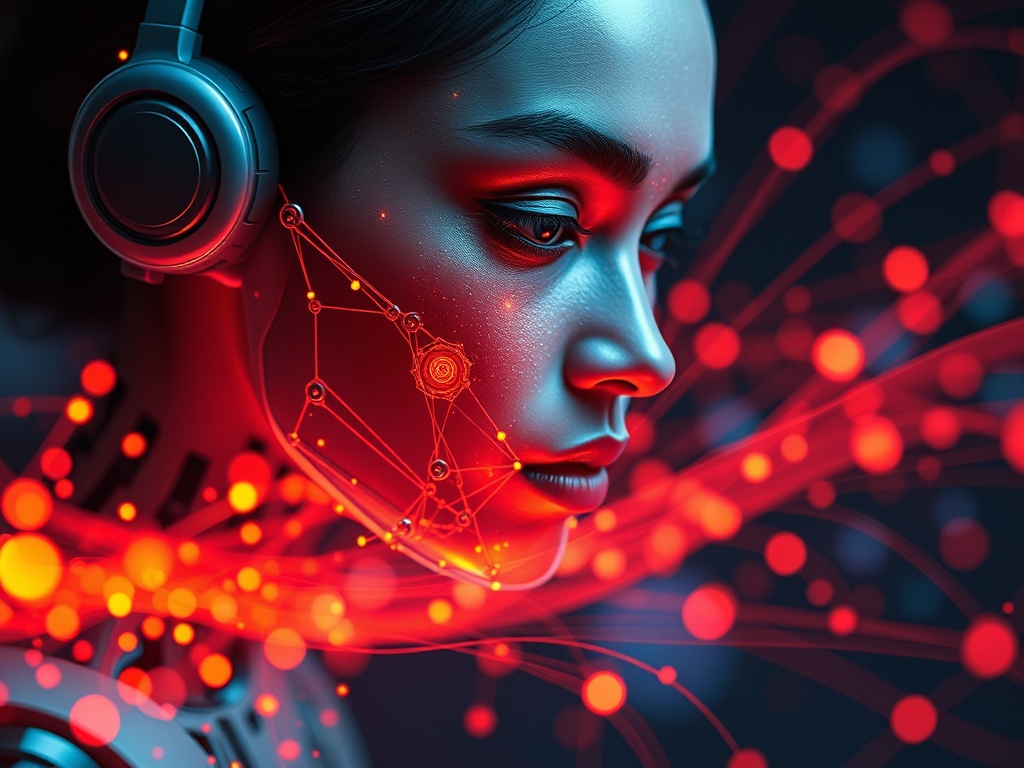
Generative AI in Creative Industries: Reshaping Art, Design & Beyond
The landscape of creative industries is undergoing a profound transformation, driven by the rapid advancements in artificial intelligence, particularly generative AI. This cutting-edge technology, leveraging deep learning models, is no longer confined to the realm of science fiction; it's actively shaping how art is conceived, music is composed, designs are rendered, and stories are written. From augmenting human capabilities to entirely automating certain creative tasks, generative AI is unleashing unprecedented possibilities, challenging traditional boundaries, and opening new avenues for innovation across various creative domains. This article delves into the multifaceted impact of generative AI on these dynamic industries.
Revolutionizing Content Creation Across Diverse Mediums
Generative AI has emerged as a powerful catalyst in revolutionizing content creation across a spectrum of creative mediums. In visual arts, algorithms can now produce stunning, original artworks, illustrations, and even photorealistic images from simple text prompts, significantly reducing the time and effort traditionally required for conceptualization and execution. For graphic designers, AI tools generate diverse layout options, color palettes, and typography suggestions, accelerating the iterative design process. Musicians are utilizing generative AI to compose melodies, harmonies, and entire instrumental pieces, experimenting with styles and genres in ways previously unimaginable. Similarly, writers and marketers are harnessing AI to draft compelling ad copy, articles, and even fiction, streamlining workflows and fostering new narrative forms. This technological leap allows creators to transcend conventional limitations, enabling faster prototyping, broader experimentation, and the rapid production of high-quality, diverse content tailored to specific needs and audiences, truly democratizing the tools of creation.
Key Generative AI Tools and Their Applications
The market is rapidly expanding with an array of sophisticated generative AI tools, each designed to address specific creative needs and empower professionals across various sectors. These platforms harness advanced machine learning and deep learning algorithms to interpret user inputs and produce highly original and contextually relevant outputs. Understanding their individual strengths and applications is crucial for creators looking to integrate AI into their workflow and maximize their creative potential. From image synthesis to natural language generation, these tools are redefining the boundaries of what's possible in digital creation, offering unprecedented capabilities for innovation and efficiency.
- Image Generation Platforms (e.g., Midjourney, DALL-E, Stable Diffusion): These tools transform text descriptions into vivid, high-resolution images, illustrations, and even 3D models. Artists and designers use them for rapid concept art, mood board creation, unique visual asset generation, and even creating entire advertising campaigns without traditional photography or illustration.
- Text Generation Engines (e.g., GPT-3, GPT-4): Capable of producing human-like text, these models assist writers, marketers, and content creators with drafting articles, scripts, ad copy, social media posts, and even generating ideas for storylines or product names. They accelerate brainstorming and provide foundational drafts for further refinement.
- Music Composition Software (e.g., Amper Music, AIVA): Leveraging AI, these platforms can compose original musical pieces in various genres, generate background scores for videos, podcasts, or games, and assist professional musicians with exploring new melodic structures and harmonies. They democratize music creation, making it accessible to a broader audience.
- Video and Animation Tools (e.g., RunwayML, Synthesia): These advanced platforms enable creators to generate video clips from text, apply complex visual effects, perform style transfers, or even create synthetic avatars speaking custom scripts. They dramatically reduce the cost and complexity associated with traditional video production and animation, opening doors for independent filmmakers and content creators.
Augmenting Human Creativity and Workflow Efficiency
One of the most significant impacts of generative AI in creative industries is its role in augmenting human creativity rather than replacing it. Far from rendering human artists obsolete, AI tools are becoming indispensable collaborators, enabling creators to push the boundaries of their imagination. By automating repetitive or time-consuming tasks, such as generating variations of a design, suggesting color palettes, or drafting initial content outlines, AI frees up valuable human time. This allows artists, designers, and writers to focus on higher-level conceptualization, strategic thinking, and the intricate details that require unique human insight and emotional depth. The synergy between human intuition and AI's processing power fosters an environment where innovation thrives, leading to more complex, nuanced, and original creative outputs. This augmentation not only enhances the quality of work but also significantly boosts workflow efficiency, allowing projects to be completed faster and with greater creative exploration.
Navigating Ethical Dilemmas and Copyright Concerns
While generative AI presents immense opportunities, its rapid integration into creative industries also brings forth complex ethical dilemmas and significant copyright concerns that demand careful consideration. A primary ethical challenge revolves around attribution and originality. When an AI generates artwork or text, who owns the copyright: the developer of the AI, the user who prompted it, or is it uncopyrightable? The training data for these models often includes vast amounts of existing copyrighted material, raising questions about fair use and potential infringement. There are also concerns about the proliferation of deepfakes and AI-generated content that could be used for misinformation or malicious purposes, blurring the lines between reality and synthetic creation. Furthermore, the economic impact on human artists and creators, as AI tools become more sophisticated and accessible, is a critical discussion point, prompting debates about fair compensation and the future of creative professions. Addressing these issues requires robust legal frameworks, transparent AI development practices, and a collective commitment to ethical AI deployment to ensure a responsible and equitable creative ecosystem.
The Future Landscape: New Horizons for Creative Professionals
The trajectory of generative AI suggests an exciting and transformative future for creative professionals, opening up new horizons and redefining traditional roles. We can anticipate AI tools becoming even more intuitive and integrated, acting as true creative partners capable of understanding nuanced artistic intent and executing complex visions with increasing precision. This will likely lead to the emergence of entirely new creative disciplines and job roles focused on AI-human collaboration, such as "prompt engineers" or "AI art directors" who specialize in guiding AI models to achieve specific aesthetic or narrative goals. Furthermore, generative AI could democratize access to high-quality creative tools, empowering independent artists and small studios to produce work on par with larger enterprises. Personalized content creation, adaptive storytelling, and dynamically generated media experiences will become more prevalent, catering to individual preferences in real-time. The future promises a creative landscape where innovation is accelerated, boundaries are continually challenged, and the symbiotic relationship between human ingenuity and artificial intelligence unlocks unprecedented forms of artistic expression and commercial opportunity.
Conclusion
Generative AI is undeniably revolutionizing the creative industries, ushering in an era of unprecedented innovation and efficiency. From transforming how we create art, music, and written content to augmenting human capabilities and streamlining workflows, its impact is profound and far-reaching. While ethical considerations surrounding copyright, originality, and the future of human labor remain crucial discussion points, the potential for AI to unlock new creative avenues and empower a broader spectrum of creators is immense. As these technologies continue to evolve, the synergy between human imagination and artificial intelligence will undoubtedly forge new artistic frontiers, redefine professional roles, and ultimately reshape the very fabric of creative expression. Embracing this powerful technology responsibly will be key to harnessing its full potential. Stay informed about the latest AI advancements by subscribing to AI Insights for more deep dives into machine learning and technology trends!



Aucun commentaire:
Enregistrer un commentaire