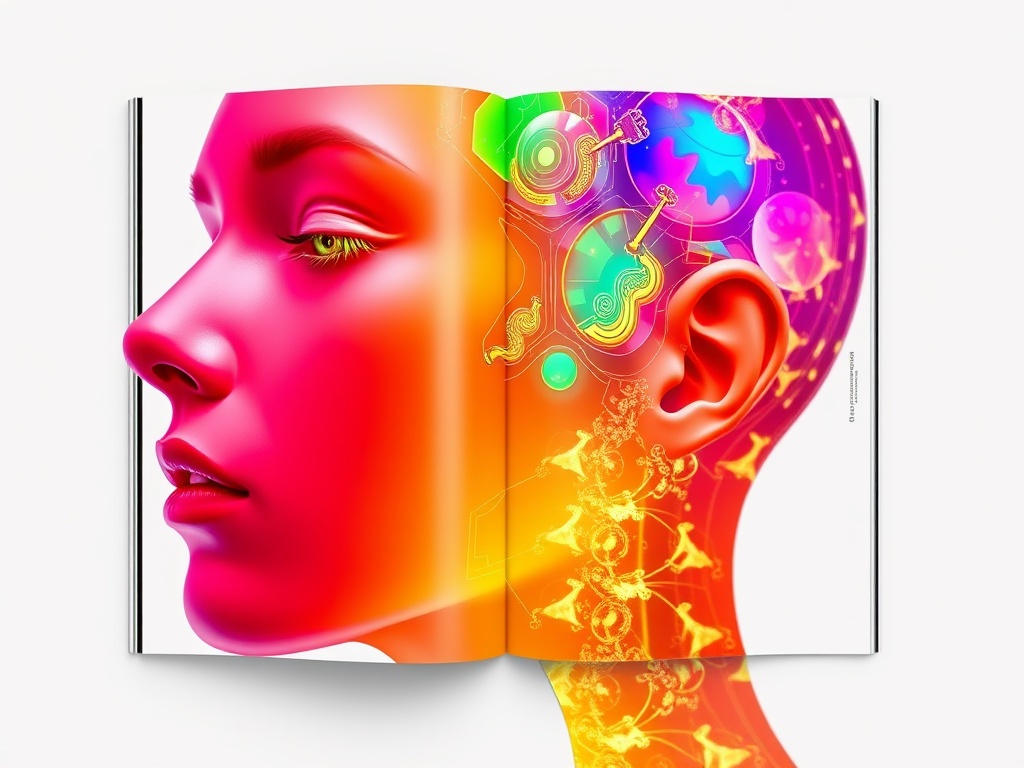
Generative AI in Creative Industries
The landscape of creativity is undergoing a profound transformation, spearheaded by the rapid advancements in artificial intelligence, particularly generative AI. Once confined to the realms of science fiction, the ability of machines to create novel and original content is now a tangible reality, reshaping industries from art and music to design and storytelling. Generative AI, powered by sophisticated deep learning models, is not merely automating tasks but actively participating in the creative process, offering unprecedented tools and possibilities. This paradigm shift compels us to re-evaluate traditional creative workflows, opening doors to innovation, efficiency, and entirely new forms of artistic expression across a spectrum of creative fields.
Redefining Artistic Creation
Generative AI is fundamentally redefining what it means to create art, music, and visual content. Tools like DALL-E 3, Midjourney, and Stable Diffusion allow users to generate intricate images from simple text prompts, democratizing visual artistry and enabling rapid prototyping for designers. Artists are leveraging these platforms not just for final pieces but as powerful brainstorming aids, exploring countless stylistic variations and conceptual directions in minutes. In music, AI composers like Amper Music and AIVA can generate bespoke soundtracks, jingles, or even entire symphonies, providing a fertile ground for musicians to experiment with new harmonies, melodies, and instrumentation. Furthermore, 3D artists are utilizing generative models to quickly create complex models, textures, and environments, drastically cutting down on laborious manual processes and freeing up time for more conceptual work. This fusion of human intent and machine generation is leading to a renaissance in digital art, pushing the boundaries of aesthetics and accessibility.
Enhancing Efficiency and Workflow
Beyond novel creation, generative AI significantly enhances efficiency and streamlines workflows within creative industries, addressing bottlenecks and accelerating production cycles. This capability is particularly valuable in fast-paced environments where content demand is high and resources are often stretched. AI tools can handle repetitive or time-consuming tasks, allowing human creatives to focus on higher-level strategic thinking and conceptual development. The impact extends across various stages of the creative pipeline, from initial ideation to final delivery, ensuring that projects can move from concept to completion with unprecedented speed and agility.
- Ideation & Brainstorming: Generative AI can quickly produce a multitude of concepts, variations, and stylistic interpretations based on initial inputs. This rapid ideation process helps artists and designers explore a wider range of possibilities much faster than traditional manual methods, sparking new ideas and preventing creative blocks.
- Rapid Prototyping & Iteration: For product designers, architects, and game developers, AI can generate numerous design iterations or architectural layouts in moments. This allows for quick testing, feedback, and refinement, significantly reducing the time and cost associated with developing prototypes and moving through design cycles.
- Content Scaling & Personalization: Marketing agencies and media companies can leverage generative AI to produce vast amounts of personalized content, such as ad copy, social media posts, or video snippets, tailored to specific audience segments. This enables hyper-personalization at scale, improving engagement and campaign effectiveness.
- Bridging Skill Gaps: AI tools can empower individuals or small teams to perform tasks that previously required specialized skills. For example, a graphic designer without deep animation experience can use AI to generate basic animations, or a writer can create accompanying visuals without needing a dedicated illustrator, democratizing access to complex creative processes.
New Forms of Entertainment and Storytelling
Generative AI is unlocking entirely new dimensions for entertainment and storytelling, moving beyond static content to dynamic, personalized, and interactive experiences. In the gaming industry, AI can create procedurally generated worlds, characters, and quests, offering infinite replayability and unique experiences for every player. Imagine games where narratives adapt in real-time to player choices, characters evolve based on interactions, and environments shift dynamically. Film and television are exploring AI for scriptwriting assistance, generating alternative dialogue, or even designing entire scenes and visual effects with unprecedented speed and detail. Personalized content streams, where AI curates and even generates stories, music, or visual art specifically tailored to an individual’s preferences and mood, are becoming a reality. This shift from passive consumption to active participation and bespoke experiences marks a significant evolution in how audiences engage with entertainment, promising a future where every interaction is uniquely crafted and deeply immersive, pushing the boundaries of traditional narrative structures and engagement models.
Challenges and Ethical Considerations
While the potential of generative AI is immense, its integration into creative industries also presents significant challenges and ethical dilemmas that demand careful consideration. One of the foremost concerns is intellectual property and copyright. When an AI generates a piece of art or music, who owns the copyright? Is it the AI’s developer, the user who prompted it, or is the work uncopyrightable? Furthermore, many generative models are trained on vast datasets of existing human-created works, raising questions about fair use, consent, and compensation for original artists. The potential for job displacement among artists, writers, and designers is another pressing issue, although many argue that AI will augment rather than replace human creativity. Concerns about authenticity and originality also arise; how do we distinguish between human and AI-generated content, and what value do we place on each? Bias embedded in training data can lead to generative AI producing stereotypical or harmful content, requiring careful curation and ethical oversight. Addressing these complex issues is crucial for ensuring a fair, equitable, and responsible future for generative AI in creative fields.
The Future of Human-AI Collaboration
The trajectory of generative AI in creative industries points not towards human obsolescence, but towards a powerful and synergistic future of human-AI collaboration. Rather than viewing AI as a replacement, forward-thinking creatives are embracing it as a sophisticated co-creator, a tireless assistant, and an unparalleled source of inspiration. This partnership allows artists to transcend technical limitations, explore concepts that were previously too time-consuming or complex, and amplify their unique creative vision. AI can handle the laborious, repetitive tasks, freeing human minds for conceptualization, emotional depth, and critical refinement. Designers can iterate through thousands of possibilities with AI, while musicians can experiment with genre-bending compositions. The role of the human shifts from sole creator to curator, director, and visionary, guiding AI to produce works that resonate with human experience and emotion. This evolving dynamic suggests a future where creativity is a dialogue between human ingenuity and artificial intelligence, leading to an explosion of innovation and entirely new artistic paradigms that celebrate both technological prowess and the enduring power of human imagination.
Conclusion
Generative AI stands as a transformative force within creative industries, fundamentally reshaping how art, music, design, and storytelling are conceived and brought to life. From democratizing artistic creation and enhancing operational efficiency to forging new frontiers in entertainment, its impact is undeniable. While navigating critical challenges such as intellectual property, job evolution, and ethical considerations, the overarching narrative points towards a future defined by powerful human-AI collaboration. This partnership promises to amplify human creativity, unlock unprecedented possibilities, and lead to an era of innovation where the boundaries of imagination are continually expanded. Embracing these advanced AI tools will not only define the next generation of creative output but also empower a new class of hybrid artists and innovators. Explore more about the cutting-edge of artificial intelligence and its impact across various sectors on AI Insights.