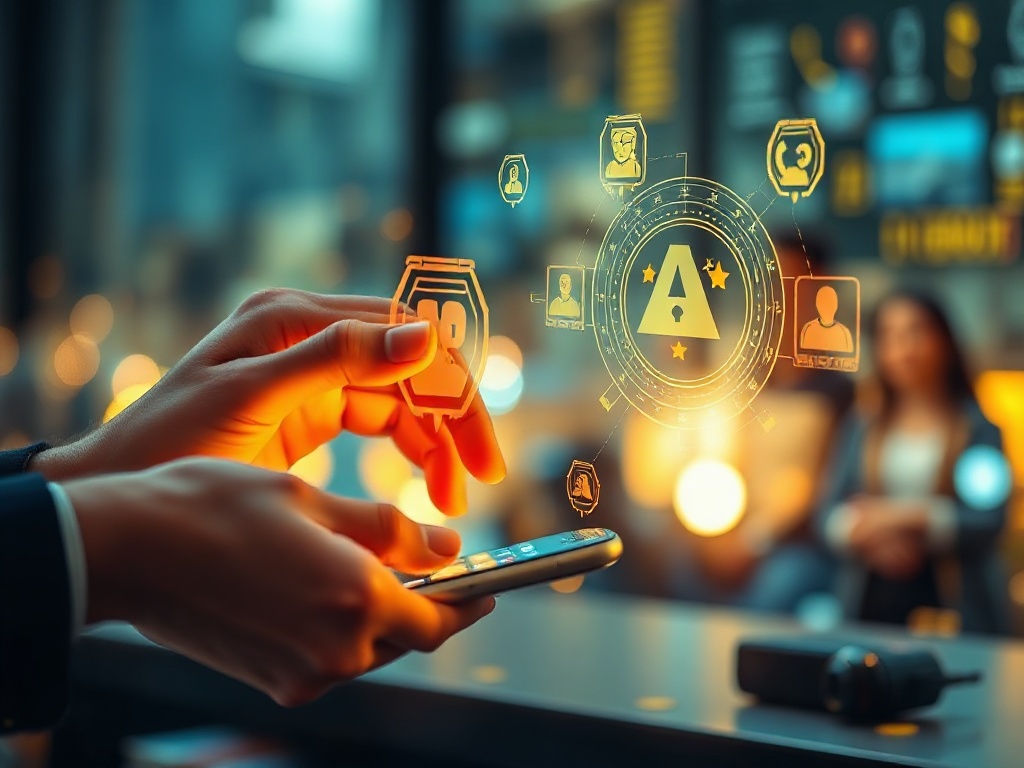
Edge AI Intelligence on IoT Devices
The proliferation of Internet of Things (IoT) devices has created an unprecedented volume of data, demanding innovative approaches to processing and analysis. Traditionally, much of this data was transmitted to centralized cloud servers for artificial intelligence (AI) processing. However, this model often introduces significant latency, bandwidth constraints, and privacy concerns. Enter Edge AI, a transformative paradigm that brings the power of AI, machine learning, and deep learning directly to the source of data generation—the IoT devices themselves. This shift empowers devices to make intelligent decisions locally and in real-time, revolutionizing everything from smart cities to industrial automation and paving the way for truly autonomous and responsive systems.
The Paradigm Shift: From Cloud to Edge
For years, the conventional architecture for deploying artificial intelligence in IoT systems relied heavily on cloud computing. Data collected by myriad sensors and devices would be streamed to powerful, remote data centers, where sophisticated machine learning and deep learning models would analyze it. While effective for complex, resource-intensive tasks, this cloud-centric approach presented inherent limitations. High network latency became a bottleneck for applications requiring instantaneous responses, such as autonomous vehicles or critical industrial control systems. Furthermore, the constant transmission of vast datasets consumed considerable bandwidth, incurring costs and increasing the attack surface for potential security breaches. Storing sensitive information in a centralized cloud also raised significant data privacy concerns, particularly in highly regulated sectors.
Edge AI represents a fundamental re-architecture of this processing model. Instead of sending all data to the cloud, AI algorithms are deployed directly onto or very close to the IoT devices themselves. "The edge" can refer to the device itself (e.g., a smart camera with an embedded AI chip), a local gateway, or a micro-data center located near the data source. This localized processing minimizes the need for continuous cloud connectivity, reducing latency to near-zero and significantly cutting down on bandwidth consumption. By keeping sensitive data on-site, Edge AI also inherently enhances privacy and security, as less raw data needs to traverse public networks. This paradigm shift is not merely an optimization; it's a foundational change enabling new classes of applications and functionalities that were previously impractical or impossible.
Core Benefits of Edge AI on IoT
The integration of artificial intelligence directly into IoT devices through Edge AI brings forth a multitude of compelling advantages that are reshaping the landscape of technology trends. These benefits are critical enablers for next-generation applications requiring speed, security, and operational efficiency, especially in fields driven by machine learning and deep learning breakthroughs. Moving processing closer to the data source fundamentally addresses many of the bottlenecks associated with traditional cloud-based AI architectures.
- Real-time Processing and Decision Making: One of the most significant benefits is the ability to process data and make decisions instantaneously. For applications like autonomous vehicles, robotics, or industrial safety systems, even milliseconds of delay can have critical consequences. Edge AI eliminates the round trip to the cloud, allowing devices to analyze sensor data and react in real-time, leading to safer, more responsive, and more efficient operations without relying on network availability or speed.
- Enhanced Data Privacy and Security: By processing data locally, Edge AI significantly reduces the amount of sensitive information transmitted over networks to the cloud. This localized processing means that raw, potentially identifiable data never leaves the device or the immediate local network. This approach inherently strengthens data privacy protocols and reduces exposure to cyber threats, making it particularly attractive for applications in healthcare, surveillance, and personal data management where regulatory compliance and user trust are paramount.
- Reduced Bandwidth Consumption and Latency: The sheer volume of data generated by IoT devices can quickly overwhelm network infrastructure if all of it needs to be sent to the cloud. Edge AI filters, aggregates, and analyzes data at the source, transmitting only relevant insights or anomalies back to the cloud. This drastically reduces bandwidth requirements, lowering operational costs and alleviating network congestion. The elimination of cloud round-trip time also virtually eradicates network latency, ensuring immediate responses regardless of internet connection quality.
- Increased Reliability and Autonomy: Edge AI empowers IoT devices to function autonomously even when network connectivity is intermittent or completely unavailable. Devices can continue to operate, make decisions, and perform tasks based on their local AI models. This resilience is crucial for critical infrastructure, remote monitoring in harsh environments, or disaster response scenarios where stable cloud access cannot be guaranteed. It ensures continuous operation and maintains system integrity, enhancing overall robustness.
Key Technologies Powering Edge AI for IoT
The successful deployment of Edge AI on resource-constrained IoT devices is not merely a conceptual shift but is underpinned by a sophisticated convergence of hardware, software, and networking advancements. These technology trends are making it feasible to embed complex artificial intelligence, machine learning, and deep learning capabilities directly into the edge, propelling the widespread adoption of intelligent IoT systems. The challenge lies in performing powerful computations within strict limits of power, size, and cost.
At the heart of Edge AI are specialized hardware accelerators. Traditional CPUs are not optimized for the parallel processing demands of neural networks. Consequently, devices are increasingly equipped with AI-specific chips such as Neural Processing Units (NPUs), Graphics Processing Units (GPUs) optimized for inference, or Tensor Processing Units (TPUs). These accelerators are designed to perform matrix multiplications and other common AI operations with extreme efficiency, delivering high performance per watt. Companies like NVIDIA, Intel (with Movidius VPUs and OpenVINO), and Google (with Edge TPUs) are leading the charge in developing these low-power, high-performance inference engines suitable for embedding in everything from tiny sensors to complex industrial gateways.
Complementing the hardware are optimized AI models and frameworks. Full-scale deep learning models are often too large and computationally intensive for edge devices. This has led to the development of techniques like model quantization (reducing precision of weights), pruning (removing less important connections), and knowledge distillation (transferring knowledge from a large model to a smaller one). Frameworks such as TensorFlow Lite, PyTorch Mobile, and ONNX Runtime are specifically designed to convert and run these lightweight, optimized models efficiently on edge hardware. Furthermore, TinyML represents a growing field focused on bringing machine learning to extremely low-power microcontrollers, pushing the boundaries of what's possible at the very edge.
Finally, robust and efficient connectivity solutions are vital for Edge AI. While much processing occurs locally, devices still need to communicate with each other, with local gateways, or occasionally with the cloud for model updates, aggregated data reporting, or more intensive analytics. Technologies like 5G and Wi-Fi 6 offer high bandwidth and low latency, enabling faster data transfer when needed. For lower-power, wide-area applications, LPWAN technologies like LoRaWAN and NB-IoT provide energy-efficient communication for devices that only need to send small packets of data periodically, ensuring a balanced approach to connectivity that supports the edge-to-cloud continuum.
Real-World Applications Across Industries
The transformative potential of Edge AI on IoT devices is being realized across a diverse range of industries, driving innovation and efficiency through real-time, intelligent decision-making at the source. These applications leverage artificial intelligence, machine learning, and deep learning to solve complex problems, enhance user experiences, and create new business opportunities, demonstrating the profound impact of these technology trends.
In Smart Cities, Edge AI is revolutionizing urban management. Smart cameras equipped with edge AI processors can perform real-time traffic analysis, detecting congestion, identifying available parking spaces, and optimizing traffic light timings without sending raw video feeds to the cloud. This not only enhances privacy by processing data locally but also improves responsiveness and efficiency. Similarly, intelligent waste management systems use edge AI to detect fill levels and types of waste, optimizing collection routes and reducing operational costs. For public safety, edge-enabled surveillance systems can detect unusual behavior or incidents instantly, alerting authorities faster than cloud-dependent systems.
Industrial IoT (IIoT) is another sector profoundly impacted. Predictive maintenance, a cornerstone of Industry 4.0, is greatly enhanced by Edge AI. Sensors on machinery can continuously monitor vibrations, temperature, and sound, with edge AI models analyzing these data streams in real-time to detect anomalies indicative of impending equipment failure. This allows for proactive maintenance, minimizing downtime and costly repairs. In quality control, edge-enabled vision systems can inspect products on assembly lines for defects with high precision and speed, ensuring consistent quality without human intervention. Worker safety is also improved through wearables that use edge AI to detect falls, hazardous gas levels, or fatigue, triggering immediate alerts.
In Healthcare, Edge AI is enabling more personalized and efficient patient care. Wearable devices can monitor vital signs, activity levels, and sleep patterns, using embedded AI to detect deviations from a patient's baseline and alert caregivers to potential health issues in real-time. This is crucial for remote patient monitoring, especially for the elderly or individuals with chronic conditions. Edge AI can also power smart hospital equipment, such as intelligent surgical tools or diagnostic devices that provide immediate insights, enhancing operational efficiency and improving patient outcomes while keeping sensitive patient data localized.
The Automotive industry is perhaps one of the most prominent beneficiaries. Autonomous vehicles rely heavily on Edge AI to process vast amounts of sensor data (from cameras, LiDAR, radar) in milliseconds. This real-time analysis is critical for perception (object detection, lane keeping), path planning, and immediate decision-making, ensuring the safety and reliability of self-driving cars. In-cabin AI systems can monitor driver attentiveness, personalize infotainment, and manage climate control, all powered by local processing to ensure responsiveness and privacy.
Even in Retail, Edge AI is making strides. Smart shelves can monitor inventory levels and detect misplaced items, while edge-powered cameras can analyze shopper traffic patterns and personalize digital signage in real-time, all without transmitting sensitive customer data to the cloud. This leads to optimized store layouts, reduced stockouts, and enhanced customer experiences.
Challenges and Future Outlook
While Edge AI presents immense opportunities for enhancing IoT devices with artificial intelligence, machine learning, and deep learning capabilities, its widespread adoption is not without hurdles. Addressing these challenges is crucial for realizing the full potential of these technology trends and ensuring the secure, efficient, and scalable deployment of intelligent edge systems.
One of the primary challenges lies in the inherent resource constraints of edge devices. IoT devices are often designed for low power consumption, compact size, and cost-effectiveness. This means they have limited computational power, memory, and energy budgets compared to cloud servers. Developing and deploying complex AI models that can run efficiently within these constraints requires significant optimization, including model compression, quantization, and specialized hardware accelerators. Managing power consumption to ensure long battery life for remote devices remains a critical design consideration.
Model deployment, management, and updates at scale also pose significant difficulties. Rolling out new AI models or updating existing ones across thousands or millions of geographically dispersed IoT devices can be a logistical nightmare. Ensuring secure, reliable, and over-the-air (OTA) updates, while maintaining model integrity and preventing tampering, is a complex task. Furthermore, monitoring the performance of these models in diverse real-world conditions and adapting them to new data patterns requires robust MLOps (Machine Learning Operations) practices tailored for the edge.
Security at the edge is another paramount concern. Edge devices are often physically accessible and may operate in less controlled environments than centralized data centers. This makes them vulnerable to physical attacks, tampering, and malicious code injection. Protecting the integrity of the AI models, the data processed locally, and the device itself from cyber threats is essential. Secure boot mechanisms, hardware-based root of trust, encrypted communication, and robust authentication protocols are vital for safeguarding edge deployments.
Finally, the heterogeneous nature of the IoT ecosystem presents interoperability challenges. There's a vast array of hardware platforms, operating systems, communication protocols, and AI frameworks. Ensuring that different edge devices can seamlessly integrate, communicate, and collaboratively execute AI tasks requires standardized interfaces and open architectures, which are still evolving.
Despite these challenges, the future of Edge AI on IoT devices looks incredibly promising. We can anticipate continued advancements in miniaturization and power efficiency of AI accelerators, making even more powerful deep learning capabilities accessible to smaller devices. The rise of federated learning, where models are trained collaboratively on decentralized edge devices without sharing raw data, will further enhance privacy and efficiency. The synergy with 5G networks will unlock new possibilities for ultra-low latency communication between edge devices and localized cloudlets. As AI becomes more sophisticated, we'll see greater autonomy at the edge, with devices capable of learning and adapting independently. The integration of quantum computing principles, even in their nascent stages, might eventually lead to breakthroughs in processing complex AI tasks at the absolute edge, pushing the boundaries of distributed intelligence even further.
Conclusion
The convergence of Edge AI and IoT devices represents a pivotal moment in the evolution of artificial intelligence and connected technology. By bringing the power of machine learning and deep learning closer to the data source, we are unlocking unprecedented levels of real-time intelligence, enhanced data privacy, reduced latency, and improved operational efficiency across countless applications. From smart cities to industrial automation and personalized healthcare, Edge AI is transforming how devices perceive, analyze, and interact with their environments, moving beyond mere connectivity to true autonomy. While challenges related to resource constraints, security, and deployment persist, ongoing advancements in hardware, software, and networking are rapidly paving the way for a future where intelligent edge devices are the norm. The journey towards a fully distributed, intelligent ecosystem is well underway, promising a more responsive, secure, and efficient world. Embrace the future of intelligent IoT; explore how Edge AI can revolutionize your operations and drive innovation today.



Aucun commentaire:
Enregistrer un commentaire