Autonomous AI Agents: The Next Frontier in Intelligent Systems
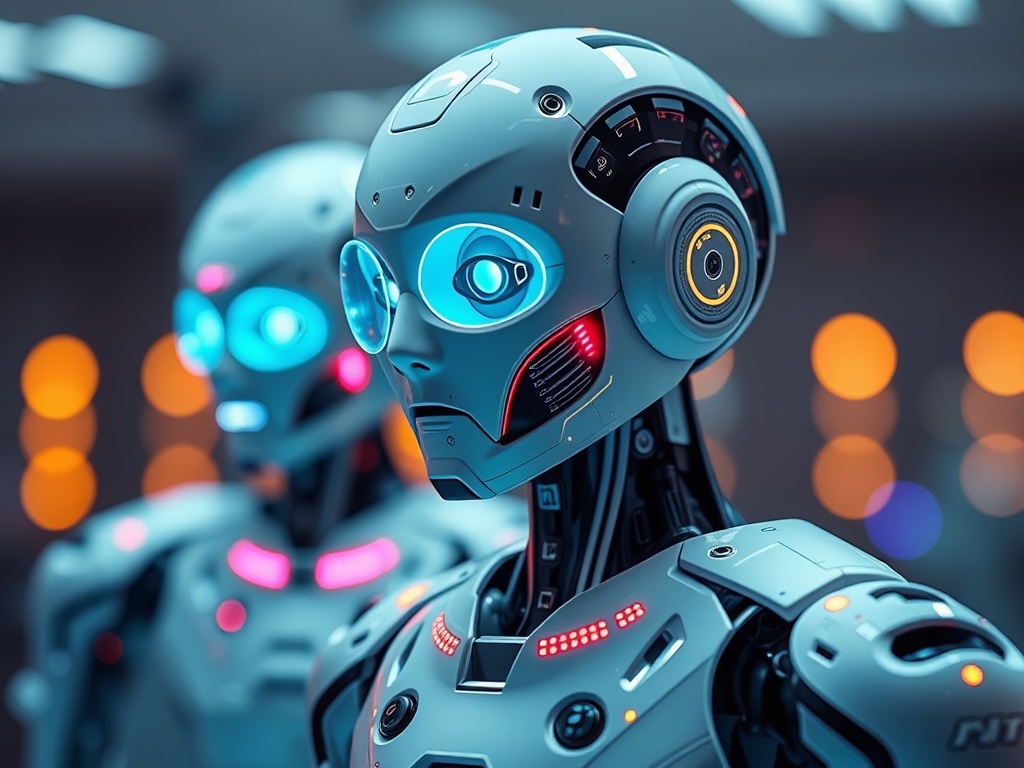
The realm of artificial intelligence is consistently evolving, pushing the boundaries of what machines can achieve. Among the most exciting and transformative developments are autonomous AI agents – sophisticated systems designed to perceive their environment, make independent decisions, and execute actions to achieve specific goals without constant human oversight. These agents represent a significant leap beyond traditional AI, promising to revolutionize industries from healthcare to finance, and fundamentally alter our interaction with technology. As researchers and developers race to unlock their full potential, the journey toward truly self-governing AI is accelerating, heralding a future where intelligent systems play an even more dynamic role in our complex world.
Defining Autonomous AI Agents and Their Core Principles
Autonomous AI agents are more than just advanced algorithms; they are intelligent entities capable of operating independently within defined parameters. At their core, these agents are characterized by several key principles. Firstly, perception: they can interpret data from their environment, whether through sensors, digital feeds, or complex datasets. Secondly, reasoning and decision-making: they process this information to understand situations, predict outcomes, and formulate optimal strategies. Thirdly, action: based on their decisions, they can execute tasks, interact with other systems, or manipulate physical objects. Finally, and perhaps most crucially, autonomous agents possess learning capabilities, allowing them to adapt, improve their performance over time, and handle unforeseen circumstances. This continuous learning loop, often powered by reinforcement learning and deep neural networks, distinguishes them from static, rule-based programs, enabling them to evolve and become increasingly proficient in their designated domains. Unlike reactive systems, autonomous agents are goal-oriented, proactively seeking to achieve their objectives with minimal human intervention.
The Technological Underpinnings and Current Research Areas
The development of autonomous AI agents is fueled by a confluence of cutting-edge technologies. Large Language Models (LLMs) provide advanced reasoning and communication capabilities, enabling agents to understand complex instructions, generate coherent plans, and even engage in natural language interactions. Reinforcement Learning (RL) is pivotal, allowing agents to learn optimal behaviors through trial and error, maximizing rewards in dynamic environments. Multi-modal AI equips agents with the ability to process and synthesize information from various sources—text, images, audio, video—for a more comprehensive understanding of their surroundings. Furthermore, sophisticated cognitive architectures are being developed to integrate these diverse capabilities, creating cohesive, intelligent systems. Current research is intensely focused on enhancing several critical aspects of these agents:
- Advanced Cognitive Architectures: Developing frameworks that enable agents to perform complex reasoning, long-term planning, memory management, and self-reflection, mirroring aspects of human cognition.
- Multi-Agent Systems for Collaboration: Designing environments where multiple autonomous agents can interact, communicate, and collaborate to solve problems that are too complex for a single agent, fostering emergent collective intelligence.
- Ethical AI and Safety Protocols: Integrating robust ethical guidelines and safety mechanisms directly into agent design to ensure their actions align with human values, prevent unintended consequences, and build public trust.
- Human-Agent Teaming and Explainability: Creating systems where humans and AI agents can work together seamlessly, with agents capable of explaining their decision-making processes to foster transparency and allow for human oversight and intervention when necessary.
Real-World Applications and Pilot Projects
The potential applications for autonomous AI agents span nearly every sector, promising to redefine efficiency, innovation, and human-machine collaboration. While full-scale deployment is still on the horizon for many applications, numerous pilot projects and early implementations are already demonstrating their transformative power. In manufacturing, autonomous robots are optimizing production lines, performing complex assembly tasks with precision and speed, and dynamically reconfiguring workflows based on demand fluctuations. Healthcare is seeing agents assist in drug discovery by autonomously sifting through vast datasets to identify potential compounds and even managing complex diagnostic workflows. In finance, sophisticated algorithmic trading agents analyze market trends and execute trades in milliseconds, while others enhance cybersecurity by autonomously detecting and neutralizing threats in real-time. The logistics industry benefits from agents optimizing supply chains, managing inventory, and coordinating autonomous delivery vehicles. Furthermore, in personal computing, the concept of highly personalized, proactive digital assistants that can manage schedules, research tasks, and even handle complex communications on behalf of users is rapidly moving from science fiction to a tangible development goal. These diverse applications underscore the versatility and profound impact autonomous AI agents are poised to have across the global economy.
Challenges and Ethical Considerations in Development
Despite their immense promise, the development of autonomous AI agents is fraught with significant technical and ethical challenges that demand careful consideration. Technically, ensuring the robustness and generalization of these agents remains a hurdle; they must perform reliably in unpredictable real-world environments and adapt to novel situations without failure. Long-term planning capabilities, particularly in complex, dynamic scenarios, are still being refined to prevent agents from getting stuck in local optima or making short-sighted decisions. Resource management, especially for agents operating in energy-constrained or computationally intensive environments, also presents a substantial engineering challenge. Ethically, the "alignment problem" – ensuring an agent's goals and actions are perfectly aligned with human values and intentions – is paramount. The potential for bias in decision-making, inherited from training data or inherent algorithmic structures, could lead to discriminatory outcomes. Concerns about job displacement, accountability in case of errors or failures, and the establishment of appropriate legal frameworks for autonomous entities are critical societal debates. Furthermore, the security vulnerabilities of highly autonomous systems, which could be exploited for malicious purposes, necessitate robust protective measures. Addressing these multifaceted challenges requires a collaborative effort involving researchers, policymakers, ethicists, and the public to ensure responsible and beneficial development.
The Future Landscape: Roadmaps and Predictions
The roadmap for autonomous AI agents points towards an increasingly integrated and sophisticated future. Over the next decade, we can anticipate agents moving beyond single-task automation to become multi-functional, context-aware collaborators. The trend is towards agents capable of not only understanding human intent but also anticipating needs, proactively offering solutions, and learning preferences over time, evolving into truly personalized digital companions and professional assistants. We will likely see the proliferation of multi-agent ecosystems where specialized agents collaborate seamlessly, managing complex projects or entire operational domains, from smart cities to global supply chains. Open-source initiatives and standardized protocols will play a crucial role in accelerating development, fostering innovation, and ensuring interoperability between diverse agent systems. Research will continue to push the boundaries of common-sense reasoning, emotional intelligence, and self-correction, making agents more resilient and adaptable. Furthermore, advancements in neuromorphic computing and quantum AI could provide the computational power necessary for agents to achieve even higher levels of autonomy and intelligence, potentially leading to systems that can learn and create in ways currently unimaginable. The future promises a world where intelligent agents are not just tools, but integral partners in human endeavor.
Conclusion
Autonomous AI agents stand at the cusp of revolutionizing how we live, work, and interact with technology. From enhancing industrial efficiency to pioneering breakthroughs in scientific research, their potential is immense and far-reaching. While the journey involves navigating complex technical hurdles and profound ethical considerations, the relentless pace of innovation in artificial intelligence suggests that truly self-governing intelligent systems are not a distant dream but an imminent reality. The ongoing development of these agents underscores a critical moment in technological history, demanding a balanced approach that prioritizes both innovation and responsible deployment. As we continue to unlock their capabilities, careful foresight and collaborative governance will be essential to harness their power for the betterment of humanity. Stay tuned to AI Insights for continuous updates and deep dives into the exciting world of autonomous AI.



Aucun commentaire:
Enregistrer un commentaire