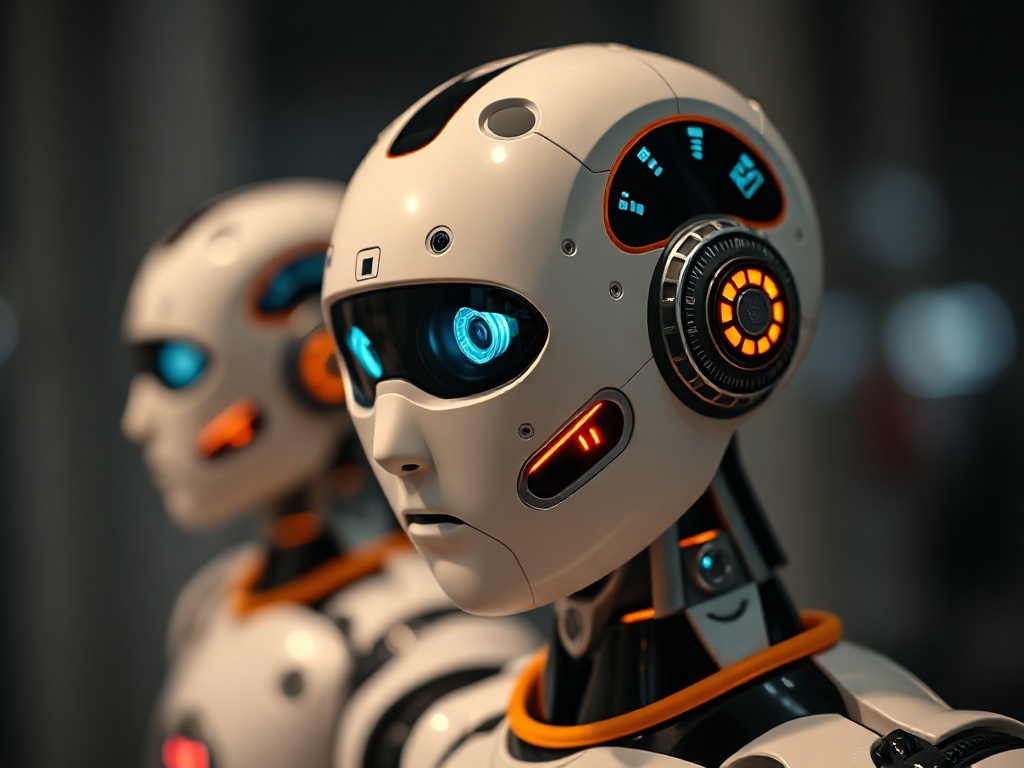
Autonomous AI Agents in Development: The Next Frontier of Intelligent Systems
The realm of artificial intelligence is continuously evolving, pushing the boundaries of what machines can achieve. Among the most exciting and transformative advancements are autonomous AI agents – sophisticated systems designed to operate independently, make decisions, and learn from their environment without constant human oversight. These agents represent a significant leap from traditional AI, promising to revolutionize industries, streamline complex processes, and fundamentally alter our interaction with technology. As research and development accelerate, understanding their core capabilities, the challenges they face, and their profound potential becomes paramount for anyone tracking the pulse of technological innovation.
Defining Autonomous AI Agents
Autonomous AI agents are a class of intelligent systems characterized by their ability to perceive their environment, reason about it, plan actions to achieve specific goals, and execute those actions, all while continuously learning and adapting. Unlike reactive AI systems, which respond to direct inputs or follow predefined scripts, autonomous agents possess a degree of self-direction and proactive behavior. They are not merely tools; they are entities capable of independent thought processes within their operational domain. This independence stems from a complex interplay of advanced algorithms, robust data processing, and sophisticated decision-making frameworks that allow them to navigate dynamic, unpredictable situations.
Key characteristics distinguishing autonomous agents include goal-orientation, where they strive to achieve predefined objectives; self-improvement, through which they refine their strategies based on experience; and adaptability, enabling them to adjust to changing circumstances. From self-driving vehicles that navigate complex road networks to intelligent software bots that manage intricate business workflows, these agents are designed to minimize human intervention, thereby increasing efficiency, accuracy, and scalability. Their development marks a pivotal shift from AI as a computational assistant to AI as an independent, intelligent collaborator.
The Architecture of Autonomy
Building truly autonomous AI agents requires a sophisticated architectural framework that integrates multiple AI disciplines. At its core, an autonomous agent typically comprises several interconnected modules that mimic cognitive processes. It begins with robust perception systems, which gather data from the environment through sensors, cameras, or digital inputs. This raw data is then processed and interpreted by cognitive modules responsible for understanding, reasoning, and planning. These modules leverage advanced machine learning techniques to predict outcomes, evaluate options, and formulate strategies to achieve the agent's goals. Finally, action modules translate these plans into physical or digital commands, interacting with the environment. The entire system is underpinned by continuous learning mechanisms, allowing the agent to refine its understanding, improve its decision-making, and adapt its behavior over time. This iterative loop of perceive-reason-act-learn is fundamental to achieving true autonomy.
The complexity of this architecture varies significantly depending on the agent's domain and required level of autonomy. For instance, an autonomous agent designed for scientific discovery might require sophisticated knowledge representation and inference engines, while a robotic agent operating in a physical space would heavily rely on advanced computer vision and motor control systems. The integration of these diverse components, often leveraging breakthroughs in deep learning, reinforcement learning, and symbolic AI, is crucial for creating agents capable of handling real-world complexity and uncertainty.
- Advanced Machine Learning Algorithms, particularly Reinforcement Learning and Deep Learning, enable agents to learn optimal strategies from experience and process complex sensory data.
- Sophisticated Planning and Reasoning Engines allow agents to formulate multi-step plans, anticipate consequences, and make logical decisions in dynamic environments.
- Robust Perception Systems, including computer vision, natural language processing, and sensor fusion, empower agents to accurately understand and interpret their surroundings.
- Self-Correction and Adaptive Learning Mechanisms continuously refine the agent's knowledge base and behavioral patterns, enhancing performance and resilience over time.
Current Development & Early Implementations
The concept of autonomous AI agents is rapidly moving from theoretical research to practical application, with significant strides being made in laboratories and industries worldwide. Leading research institutions like Google DeepMind, OpenAI, and numerous university labs are at the forefront, developing foundational models and experimental agents capable of complex tasks. We are already witnessing early implementations across various sectors, demonstrating the immense potential of these intelligent systems. In robotics, autonomous drones are performing inspections, delivery services, and even navigating hazardous environments, while advanced manufacturing robots are adapting to production changes without human reprogramming.
In the digital realm, autonomous software agents are emerging as powerful tools for task automation and personalized assistance. These range from intelligent personal assistants that proactively manage schedules and anticipate user needs to sophisticated agents in financial markets executing trades based on real-time data analysis. Within scientific discovery, AI agents are accelerating research by autonomously designing experiments, analyzing vast datasets, and even proposing novel hypotheses in fields like drug discovery and material science. While many of these applications still operate within defined parameters or require some human oversight, they represent critical steps towards fully autonomous systems, demonstrating capabilities that were once confined to science fiction. The current phase of development is characterized by a focus on narrow AI autonomy, where agents excel in specific domains, paving the way for more generalized intelligence.
Challenges and Roadblocks
Despite their immense promise, the development of fully autonomous AI agents is fraught with significant technical, ethical, and societal challenges. Technically, ensuring the robustness and reliability of these agents in unpredictable real-world environments remains a major hurdle. Unforeseen circumstances, sensor failures, or novel situations can lead to unexpected behaviors or critical errors. The "explainability" problem, where understanding the rationale behind an AI agent's complex decisions is difficult, poses another challenge, particularly in high-stakes applications. Moreover, guaranteeing the safety and control of autonomous systems, preventing them from acting contrary to human intent, is paramount. The computational resources required for advanced autonomous agents, coupled with the need for vast quantities of high-quality data for training, also present practical limitations.
Beyond the technical, profound ethical and societal questions loom large. The potential for widespread job displacement as agents automate increasingly complex tasks requires careful consideration and proactive planning. Issues of accountability become complex when an autonomous agent makes a mistake; determining who is responsible – the developer, the deployer, or the agent itself – is an unresolved legal and ethical dilemma. Bias embedded in training data can lead to discriminatory outcomes, perpetuating and amplifying societal inequities. Furthermore, the security implications of autonomous systems, including their vulnerability to malicious attacks or unintended misuse, demand robust safeguards. Addressing these multifaceted challenges responsibly is crucial for the safe and beneficial integration of autonomous AI agents into society.
The Future Landscape: Impact and Potential
The trajectory of autonomous AI agent development points towards a future where intelligent systems play an increasingly pivotal role in almost every facet of human endeavor. Their transformative potential spans across industries, promising unparalleled efficiencies, innovations, and capabilities. In healthcare, autonomous agents could revolutionize diagnostics, personalize treatment plans, and even assist in complex surgeries, leading to improved patient outcomes and expanded access to medical care. The logistics and supply chain sectors stand to gain immensely from self-optimizing networks, where autonomous agents manage inventory, predict demand, and orchestrate deliveries with unprecedented precision and resilience.
Finance could see more sophisticated algorithmic trading, advanced fraud detection, and personalized financial advice delivered by agents that continuously learn and adapt to market dynamics. In our daily lives, hyper-personalized digital companions could proactively manage our well-being, learning our preferences, anticipating needs, and simplifying complex tasks. Furthermore, autonomous agents are poised to tackle challenges in hazardous environments, from deep-sea exploration and disaster recovery to space missions, performing tasks too dangerous or tedious for humans. This future envisions a symbiotic relationship between humans and AI, where autonomous agents augment human capabilities, fostering innovation and creating a more efficient, interconnected, and intelligent world, provided their development is guided by ethical considerations and a focus on human welfare.
Conclusion
Autonomous AI agents represent a groundbreaking leap in artificial intelligence, moving us closer to systems that can operate, learn, and adapt with minimal human intervention. While their development is an intricate journey fraught with technical complexities and profound ethical considerations, the potential benefits they offer across industries and aspects of daily life are immense. From revolutionizing healthcare and logistics to enabling new frontiers in scientific discovery and personal assistance, these intelligent systems are poised to redefine our interaction with technology. As researchers and developers continue to refine their capabilities and address the inherent challenges, ensuring responsible development, transparency, and a focus on societal well-being will be paramount. The dawn of autonomous AI agents promises an era of unprecedented efficiency and innovation, provided we navigate its complexities with foresight and ethical diligence. Stay tuned to AI Insights for the latest advancements and in-depth analyses of this transformative technology.