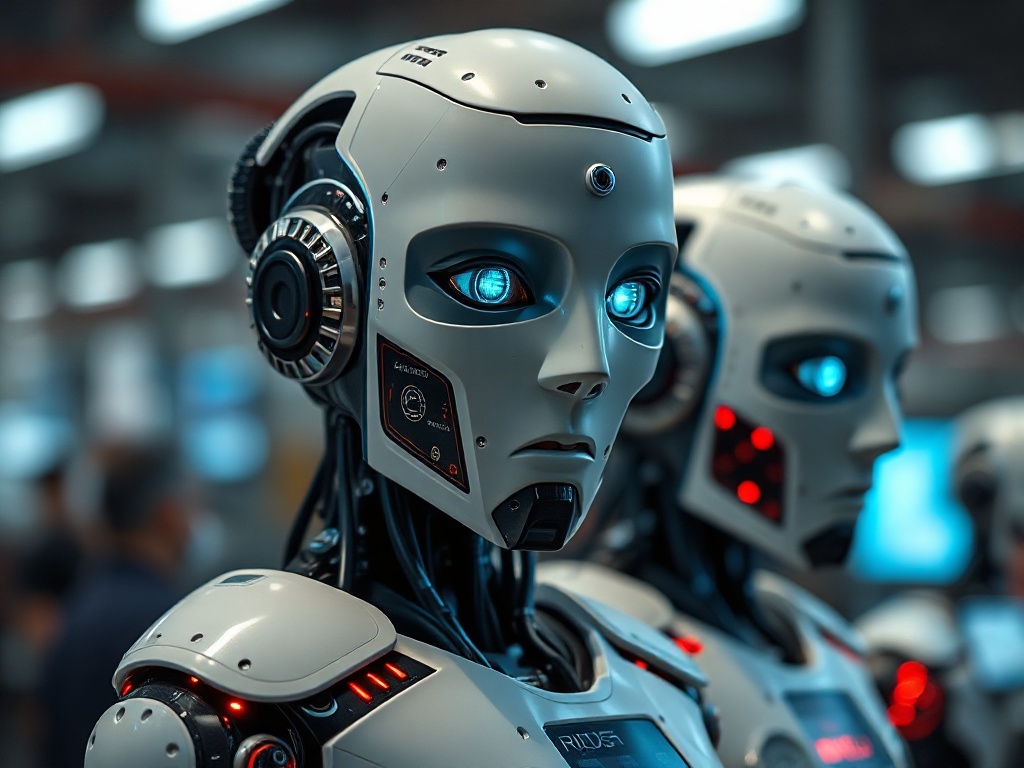
Autonomous AI Agents in Development
The landscape of artificial intelligence is rapidly evolving, moving beyond sophisticated algorithms to the creation of truly autonomous AI agents. These aren't just intelligent systems; they are entities designed to perceive their environment, make independent decisions, and execute actions to achieve specific goals, all without constant human oversight. The development of such agents marks a significant leap forward, promising to revolutionize industries from healthcare and logistics to scientific research and personal assistance. As these autonomous systems mature, they herald an era where AI becomes a proactive partner, capable of complex problem-solving and adaptive behavior, pushing the boundaries of what machines can accomplish independently.
The Evolution of AI Autonomy
The journey towards autonomous AI agents is a testament to decades of progress in computer science and artificial intelligence. Initially, AI systems were largely reactive, responding to specific inputs with pre-programmed outputs, much like early expert systems or simple rule-based algorithms. The advent of machine learning and deep learning, however, introduced a paradigm shift, enabling AI to learn from data, identify patterns, and make predictions with increasing accuracy. This learning capability laid the groundwork for more sophisticated decision-making processes. From there, the concept of agents emerged, initially as software entities designed to perform tasks on behalf of a user. These early agents, while helpful, still operated within tightly defined parameters and required significant human intervention for adaptation or complex problem-solving. The current phase of development focuses on integrating advanced perception, reasoning, and planning capabilities, allowing agents to operate in dynamic, unpredictable environments. This continuous evolution from simple automation to complex, self-directed entities underscores a profound shift in how we envision and interact with intelligent machines, moving towards true autonomy.
Core Components of Autonomous Agents
For an AI agent to be truly autonomous, it must possess a sophisticated suite of capabilities that mimic, and in some cases exceed, human cognitive functions. These core components work in concert to enable independent operation and adaptive behavior. Without a robust integration of these elements, an agent remains a mere tool rather than an autonomous entity capable of navigating complex, real-world scenarios. Understanding these foundational pillars is crucial to appreciating the engineering marvel that autonomous AI represents, and how it differs significantly from traditional software. The synergy between these components allows for a dynamic and responsive system, capable of continuous improvement and adaptation in the face of novel challenges and changing environments, pushing the boundaries of what intelligent machines can achieve independently.
- Perception: This involves the agent's ability to gather and interpret data from its environment through various sensors, whether virtual or physical. For a software agent, this might mean processing vast amounts of text, images, or data streams. For a robotic agent, it includes visual recognition, auditory processing, and tactile feedback, enabling it to build a comprehensive understanding of its surroundings, objects, and ongoing events.
- Reasoning & Decision Making: Once information is perceived, the agent must process it to understand its implications and determine the best course of action. This involves complex algorithms for problem-solving, planning, and goal-setting. It includes symbolic reasoning, probabilistic inference, and reinforcement learning strategies to weigh options, predict outcomes, and make choices that align with its objectives, even in uncertain conditions.
- Action Execution: After making a decision, the agent must be able to carry it out effectively. This could involve generating natural language responses, manipulating data, controlling robotic actuators, or interfacing with other software systems. The ability to translate decisions into tangible actions is critical for the agent to impact its environment and achieve its tasks, demonstrating its operational effectiveness.
- Continuous Learning: A truly autonomous agent doesn't just execute; it learns and adapts. Through experiences, feedback loops, and exposure to new data, agents refine their models, improve their decision-making processes, and enhance their performance over time. This continuous learning capability, often powered by advanced machine learning techniques, ensures that agents remain effective and relevant in dynamic environments, constantly evolving their understanding and skills.
Current Applications and Pilot Programs
While the vision of fully autonomous AI agents operating seamlessly in all aspects of life is still on the horizon, significant strides are being made in developing and deploying pilot programs and early applications. These nascent agents are already demonstrating their potential to tackle complex problems and automate intricate tasks across various sectors. In scientific research, autonomous AI agents are being developed to accelerate discovery, such as in materials science where they design and conduct experiments to synthesize new compounds, significantly reducing research timelines. In logistics, advanced agents are optimizing supply chains, predicting demand fluctuations, and dynamically rerouting shipments to avoid delays, showcasing their ability to handle real-time complexities. Furthermore, in personalized healthcare, agents are assisting with diagnostic processes, analyzing patient data to identify potential risks, and even designing individualized treatment plans, offering a glimpse into a future of highly customized medical care. Tech giants and startups alike are investing heavily, with initiatives exploring everything from self-configuring network agents to sophisticated personal assistants capable of managing schedules, booking appointments, and even drafting communications, all with minimal human input. These early deployments, though often operating within controlled environments, are vital testbeds, providing invaluable insights into the capabilities, limitations, and future potential of autonomous AI, paving the way for broader adoption.
Challenges and Ethical Considerations
The development of autonomous AI agents, while promising, is fraught with significant technical and ethical challenges that demand careful consideration. Technically, ensuring the reliability and robustness of these agents in unpredictable real-world environments remains a formidable hurdle. Designing systems that can flawlessly interpret ambiguous data, adapt to novel situations without failure, and maintain performance over extended periods is incredibly complex. Issues like 'brittleness,' where agents fail unexpectedly outside their training data, or 'explainability,' where their decision-making processes are opaque, continue to be active areas of research. Beyond technical intricacies, the ethical implications are profound. Questions of accountability arise: who is responsible when an autonomous agent makes a harmful error? Ensuring fairness and preventing algorithmic bias, especially when agents are making critical decisions affecting individuals, is paramount. There are also concerns about job displacement, as highly capable autonomous agents could automate tasks currently performed by humans across various industries. Furthermore, the specter of control and alignment — ensuring that these agents' goals remain aligned with human values and that we can effectively manage their actions as they become more intelligent and independent — is a critical long-term challenge. Addressing these multifaceted challenges requires not just technological innovation but also robust regulatory frameworks, interdisciplinary collaboration, and ongoing public discourse to guide the responsible evolution of autonomous AI.
The Future Landscape: What's Next for Autonomous AI?
Looking ahead, the trajectory for autonomous AI agents points towards increasingly sophisticated and integrated systems that will redefine human-technology interaction and reshape numerous industries. We can anticipate agents moving beyond single-task automation to become multi-modal, capable of understanding and interacting with the world through various sensory inputs and outputting actions across diverse domains. This means agents that can seamlessly switch between textual, visual, and auditory processing, performing complex tasks that require a blend of these capabilities. The development of more robust general-purpose AI, coupled with advancements in reinforcement learning and transfer learning, will enable agents to learn new skills and adapt to entirely new environments much faster and with less explicit programming. Industries like urban planning could see autonomous agents optimizing city infrastructure, managing traffic flows, and even designing sustainable living spaces. In personalized education, agents could become adaptive tutors, tailoring learning experiences to individual student needs and paces. Furthermore, the collaboration between human experts and autonomous AI is expected to deepen, fostering a symbiotic relationship where agents augment human capabilities rather than simply replacing them. This future will necessitate a continuous focus on safety, transparency, and ethical governance to ensure that these powerful tools serve humanity's best interests, unlocking unprecedented levels of productivity, innovation, and problem-solving potential.
Conclusion
The journey towards fully autonomous AI agents is one of the most exciting and transformative frontiers in artificial intelligence. From their foundational components of perception, reasoning, action, and continuous learning to their burgeoning applications in science, logistics, and healthcare, these agents promise to redefine efficiency, innovation, and problem-solving. While significant technical hurdles and profound ethical considerations remain, the rapid pace of development suggests a future where autonomous AI agents will play an increasingly integral role in our society. Navigating this future responsibly requires continued research, robust ethical frameworks, and an open dialogue about their societal impact. As we stand on the cusp of this new era, understanding and engaging with these advancements is crucial for shaping a future where AI empowers humanity to achieve unprecedented progress. Explore more insights into AI's evolution and its impact by subscribing to AI Insights today!
[Autonomous AI agents are rapidly developing, promising to revolutionize industries. Explore their core components, current applications, challenges, and future impact.]


Aucun commentaire:
Enregistrer un commentaire