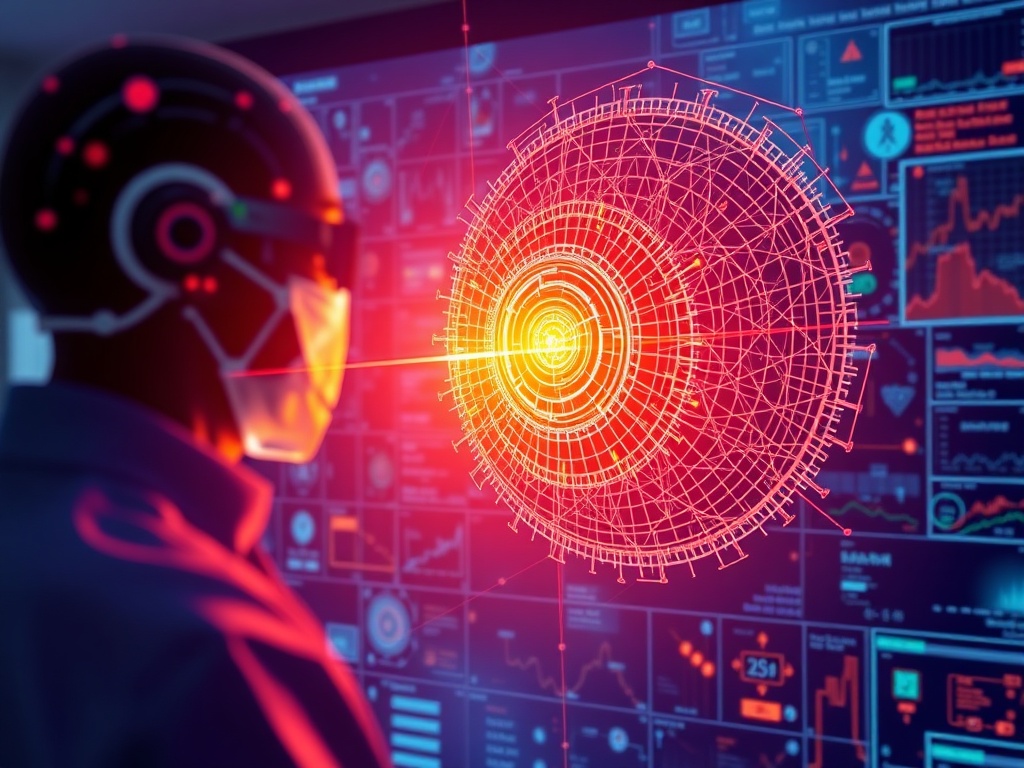
AI Transforming Healthcare Diagnostics
The landscape of healthcare is undergoing a profound transformation, spearheaded by the remarkable advancements in Artificial Intelligence (AI). Once considered the realm of science fiction, AI, machine learning, and deep learning are now integral to modern medicine, particularly in the critical domain of diagnostics. This technological revolution promises to redefine how diseases are identified, understood, and treated, moving us towards an era of unprecedented precision, efficiency, and accessibility in patient care. From enhancing the accuracy of medical imaging to predicting disease onset before symptoms even appear, AI is not merely assisting healthcare professionals; it is fundamentally reshaping the diagnostic process, offering new hope for earlier interventions and improved patient outcomes globally.
The AI Revolution in Medical Imaging
Medical imaging, encompassing X-rays, MRIs, CT scans, and ultrasound, forms the bedrock of modern diagnostics. However, interpreting these complex images is a demanding task, prone to human error and limited by the sheer volume of data. This is where AI, particularly deep learning, emerges as a game-changer. AI algorithms can be trained on vast datasets of annotated images, learning to identify subtle patterns, anomalies, and pathological features that might be missed by the human eye, especially in early stages of disease. For instance, AI-powered systems are demonstrating remarkable accuracy in detecting cancerous lesions in mammograms or lung nodules in CT scans, often outperforming human radiologists in speed and consistency. This capability not only accelerates the diagnostic process but also significantly reduces the workload on specialists, allowing them to focus on more complex cases and patient interaction. Furthermore, AI can quantify changes over time, track disease progression, and even help in predicting treatment response, thereby moving beyond simple detection to a more dynamic understanding of a patient's condition.
Predictive Analytics and Early Disease Detection
One of AI's most impactful contributions to healthcare diagnostics lies in its ability to harness predictive analytics for early disease detection. By sifting through immense volumes of disparate data—including electronic health records (EHRs), genomic data, lifestyle information, and real-time biometric data from wearable devices—AI algorithms can identify subtle patterns and risk factors indicative of future health issues. This proactive approach marks a significant shift from reactive medicine, enabling interventions before diseases become advanced and harder to treat. For example, AI can predict an individual's risk of developing chronic conditions such as diabetes, cardiovascular disease, or even certain types of cancer years in advance, based on a comprehensive analysis of their health profile. This allows healthcare providers to implement personalized prevention strategies, recommend lifestyle modifications, or initiate early screenings, dramatically improving the chances of successful management and better long-term outcomes. The power to anticipate health challenges rather than merely respond to them is a cornerstone of AI's transformative potential in diagnostics.
- Analyzing Electronic Health Records (EHRs) for subtle patterns and correlations that signify heightened risk for various conditions, often before clinical symptoms manifest.
- Integrating genomic data to identify predispositions to genetic disorders or increased susceptibility to common diseases, offering highly personalized risk assessments.
- Monitoring real-time data from wearables and IoT devices to detect deviations from a patient's baseline, such as changes in heart rate, sleep patterns, or activity levels, signaling potential health issues.
- Identifying subtle precursors to chronic conditions like diabetes or heart disease by analyzing a combination of laboratory results, demographic information, and historical health events.
AI-Powered Pathology and Lab Diagnostics
Beyond imaging, AI is also revolutionizing the field of pathology and laboratory diagnostics, an area traditionally reliant on meticulous manual examination. Digital pathology, where microscope slides are scanned into high-resolution digital images, provides the perfect canvas for AI and deep learning algorithms. These algorithms can analyze tissue samples with incredible speed and precision, assisting pathologists in identifying cancerous cells, grading tumors, and detecting other microscopic anomalies. For example, AI systems can automatically count specific cell types, measure tumor size, and even predict the aggressiveness of certain cancers with a level of consistency and detail often exceeding human capabilities. This not only significantly reduces the turnaround time for critical diagnostic results but also enhances accuracy and reduces inter-observer variability among pathologists. Furthermore, AI can correlate findings from pathology slides with genomic data or patient outcomes, providing a more comprehensive diagnostic picture. In clinical labs, AI is streamlining the analysis of blood tests, urine samples, and other bodily fluids, automating quality control and flagging abnormal results for immediate review, thereby improving efficiency and enabling faster, more reliable diagnoses across a vast array of medical conditions.
Precision Medicine and Personalized Treatment Plans
The ultimate goal of modern healthcare is to move beyond a one-size-fits-all approach to medicine and embrace personalized care, and AI is the driving force behind achieving this vision. Precision medicine, tailored to an individual's unique genetic makeup, environment, and lifestyle, relies heavily on AI for its diagnostic capabilities. By analyzing a patient's genomic profile, proteomic data, metabolomic information, and medical history, AI algorithms can predict how an individual will respond to specific drugs or treatments. This capability dramatically reduces the trial-and-error process often associated with prescribing medications, minimizing adverse drug reactions and ensuring that patients receive the most effective therapy from the outset. For instance, in oncology, AI can help identify specific genetic mutations in a tumor that make it susceptible to targeted therapies, leading to significantly better outcomes than conventional chemotherapy. AI-powered diagnostics can also help in stratifying patients into distinct risk groups, allowing for highly customized screening protocols and preventive measures. This level of personalization, enabled by AI, is transforming diagnostics from a mere identification of disease to a comprehensive understanding of the individual's unique biological landscape, leading to truly individualized and optimized treatment plans.
Challenges and Ethical Considerations
While the promise of AI in healthcare diagnostics is immense, its widespread adoption is not without significant challenges and ethical considerations that must be carefully navigated. One primary concern is data privacy and security, given the highly sensitive nature of patient health information. Robust cybersecurity measures and strict regulatory frameworks are essential to protect against breaches and misuse of data. Another critical issue is algorithmic bias; if AI models are trained on unrepresentative or biased datasets, they can perpetuate or even amplify existing health disparities, leading to inaccurate diagnoses for certain demographic groups. Ensuring fairness, transparency, and equity in AI development is paramount. Furthermore, the "black box" nature of some deep learning models poses a challenge for explainability (XAI), making it difficult for clinicians to understand how an AI arrived at a particular diagnosis. This lack of transparency can hinder trust and adoption. Regulatory approval processes for AI-driven diagnostic tools are also evolving, requiring rigorous validation and oversight to ensure safety and efficacy. Finally, the role of human oversight remains crucial; AI should augment, not replace, human expertise, requiring healthcare professionals to adapt to new workflows and develop new skills to effectively collaborate with intelligent systems, addressing concerns about potential job displacement while focusing on enhanced human capabilities.
Conclusion
Artificial Intelligence is unequivocally transforming healthcare diagnostics, ushering in an era of unprecedented precision, speed, and personalization. From revolutionizing medical imaging and enabling predictive analytics for early disease detection to empowering precision medicine and streamlining laboratory processes, AI is fundamentally reshaping how we understand and combat illness. While significant challenges related to data privacy, algorithmic bias, and regulatory frameworks remain, ongoing research and collaborative efforts are steadily addressing these hurdles. The future of healthcare will undoubtedly be intelligent, with AI-powered diagnostic tools becoming indispensable allies for clinicians, ultimately leading to earlier interventions, more effective treatments, and vastly improved patient outcomes globally. Embrace the future of intelligent healthcare; stay tuned to AI Insights for the latest developments and breakthroughs shaping this exciting frontier.



Aucun commentaire:
Enregistrer un commentaire