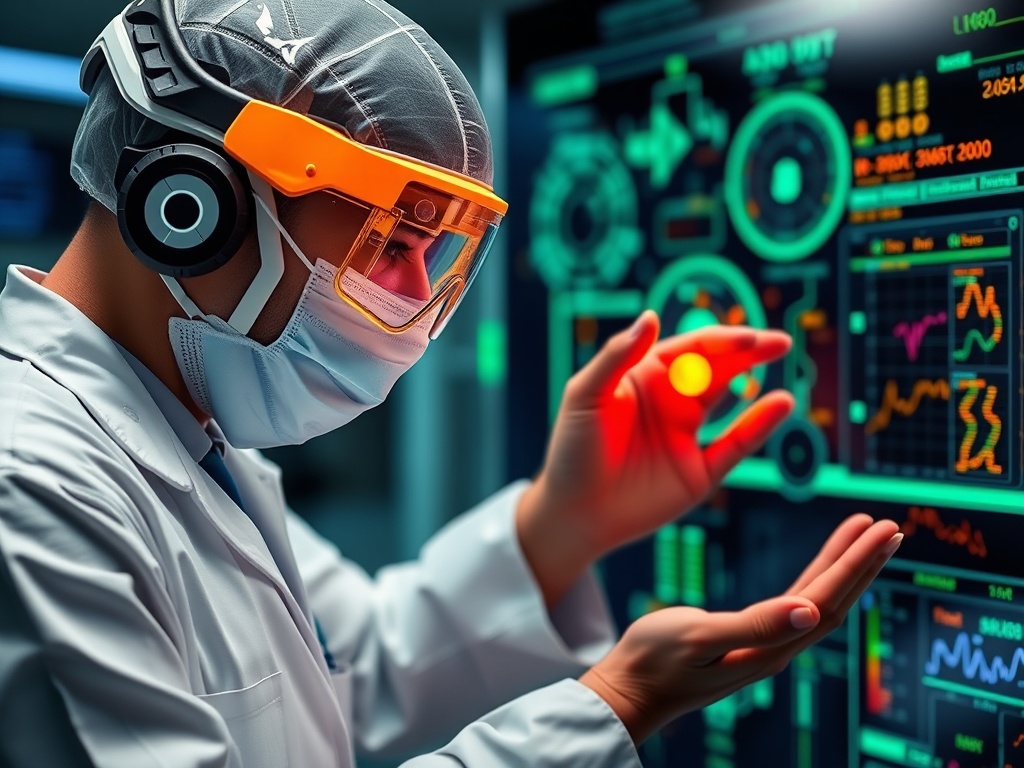
AI Transforming Healthcare Diagnostics
The landscape of healthcare diagnostics is undergoing a profound transformation, spearheaded by the relentless advancements in artificial intelligence. Historically reliant on human interpretation, often subject to variability and time constraints, diagnostic processes are now being augmented by intelligent systems capable of processing vast amounts of data with unprecedented speed and precision. This shift is not merely an incremental improvement but a fundamental re-imagining of how diseases are identified, understood, and ultimately treated. From sophisticated medical imaging analysis to early disease prediction and personalized treatment strategies, AI, machine learning, and deep learning are reshaping the future of medicine, promising a healthier, more efficient, and equitable healthcare ecosystem for all.
The AI Revolution in Medical Imaging
Medical imaging, a cornerstone of modern diagnostics, is being profoundly reshaped by artificial intelligence, particularly deep learning. Traditionally, radiologists spend countless hours meticulously analyzing X-rays, MRIs, CT scans, and ultrasounds for subtle anomalies. AI algorithms, trained on massive datasets of annotated images, can now identify patterns and abnormalities with remarkable accuracy, often surpassing human capabilities in specific tasks. For instance, deep learning models are proving exceptionally adept at detecting cancerous nodules in lung CT scans, identifying diabetic retinopathy from retinal images, and even flagging potential fractures in radiographs, often at an earlier stage than conventional methods. These AI systems act as intelligent assistants, sifting through complex imagery to highlight areas of concern, thereby reducing the diagnostic burden on clinicians, minimizing errors, and significantly speeding up the diagnostic workflow. This augmentation allows radiologists to focus on more complex cases and patient interaction, ultimately leading to faster and more reliable diagnoses for patients.
Precision and Speed: Early Disease Detection
One of the most impactful contributions of AI to healthcare diagnostics is its ability to facilitate earlier and more precise disease detection. By leveraging predictive analytics and machine learning models, AI can analyze comprehensive patient data — including electronic health records (EHRs), genomic information, lifestyle factors, and even wearable device data — to identify individuals at high risk for developing certain conditions long before symptoms manifest. This proactive approach is critical for diseases where early intervention significantly improves outcomes, such as various cancers, cardiovascular diseases, and neurodegenerative disorders. AI models can discern subtle patterns and correlations in complex datasets that are imperceptible to the human eye, enabling clinicians to intervene with preventative measures or early treatments. This paradigm shift from reactive treatment to proactive prevention holds the promise of not only saving lives but also significantly reducing the long-term burden on healthcare systems by mitigating the progression of chronic and acute conditions.
- **Genomic Analysis for Predisposition:** AI algorithms can analyze complex genomic data to identify genetic markers and predispositions for various diseases, offering personalized risk assessments.
- **Predictive Models for Chronic Diseases:** Machine learning models forecast the onset and progression of chronic conditions like diabetes, heart disease, and kidney disease based on a multitude of patient data points.
- **Real-time Monitoring for Acute Conditions:** AI-powered wearables and sensors continuously monitor vital signs and physiological markers, alerting patients and clinicians to acute events or deteriorating conditions.
- **Biomarker Identification from Complex Datasets:** AI excels at discovering novel biomarkers from blood tests, imaging, and other lab results, leading to more sensitive and specific diagnostic tests.
AI-Powered Pathology and Lab Diagnostics
Beyond medical imaging, AI is revolutionizing pathology and laboratory diagnostics, areas crucial for definitive disease identification. Traditional histopathology, which involves pathologists examining stained tissue slides under a microscope, is highly skilled but time-consuming and can be subject to inter-observer variability. Deep learning algorithms are now being trained to analyze digital pathology slides with remarkable accuracy, identifying cancerous cells, grading tumor aggressiveness, and even predicting treatment response. These systems can process vast numbers of slides much faster than humans, flagging suspicious regions for a pathologist's review and providing quantitative analyses that improve diagnostic consistency. Furthermore, in clinical laboratories, AI is automating various processes, from analyzing blood and urine samples to interpreting complex molecular tests. This automation not only accelerates throughput and reduces manual errors but also enables the discovery of subtle patterns in lab results that might indicate early disease states or specific pathogen identification, enhancing both efficiency and diagnostic precision across the board.
Personalized Medicine through AI Diagnostics
The ultimate promise of AI in diagnostics lies in its capacity to usher in an era of truly personalized medicine. By integrating and analyzing an unprecedented array of data points – including a patient's unique genomic profile, proteomic and metabolomic data, detailed clinical history, lifestyle choices, and even environmental exposures – AI can generate highly individualized diagnostic insights. This holistic approach allows for a far more nuanced understanding of a patient's health status and disease trajectory than ever before. AI algorithms can predict how an individual will respond to specific drugs (pharmacogenomics), identify the most effective therapeutic strategies based on their molecular makeup, and even anticipate potential adverse reactions. This level of personalized diagnosis moves beyond the "one-size-fits-all" approach to healthcare, enabling clinicians to tailor treatment plans with exquisite precision. For example, in oncology, AI can help select the most targeted chemotherapy or immunotherapy regimen for a particular patient's tumor, dramatically improving efficacy while minimizing side effects, thereby maximizing the potential for successful outcomes.
Challenges and Ethical Considerations
While the potential of AI in healthcare diagnostics is immense, its widespread adoption is not without significant challenges and ethical considerations that demand careful attention. Data privacy and security remain paramount concerns, as AI systems often require access to vast quantities of sensitive patient information. Ensuring compliance with regulations like HIPAA and GDPR, and safeguarding against data breaches, is crucial for maintaining public trust. Another critical issue is the potential for bias in AI algorithms, which can arise if training data does not accurately represent diverse patient populations, leading to disparities in diagnostic accuracy for certain demographic groups. Regulatory hurdles are also considerable, as health authorities like the FDA grapple with establishing appropriate frameworks for validating and approving complex AI-powered diagnostic tools. Furthermore, the "black box" problem, where AI models provide diagnoses without clear explanations of their reasoning, poses a challenge to clinician acceptance and legal accountability. Finally, while AI is an augmentative tool, the ethical implications surrounding human oversight, potential job displacement, and the ultimate responsibility for diagnostic decisions must be continuously addressed to ensure AI serves humanity responsibly.
Conclusion
The integration of AI, machine learning, and deep learning into healthcare diagnostics is undeniably revolutionary, heralding an era of unparalleled accuracy, efficiency, and personalization. From transforming how we interpret complex medical images to enabling the earliest possible detection of diseases and tailoring treatments to individual genetic profiles, AI is setting new benchmarks for diagnostic excellence. While challenges pertaining to data privacy, algorithmic bias, and regulatory frameworks persist, the ongoing innovation and collaborative efforts between AI developers and healthcare professionals are steadily addressing these hurdles. The future of healthcare diagnostics will be intrinsically linked to AI, promising not just improved patient outcomes and reduced healthcare costs, but also a more proactive, predictive, and personalized approach to well-being. To stay abreast of these groundbreaking advancements and understand their profound impact, we encourage you to explore more insights from AI Insights.



Aucun commentaire:
Enregistrer un commentaire