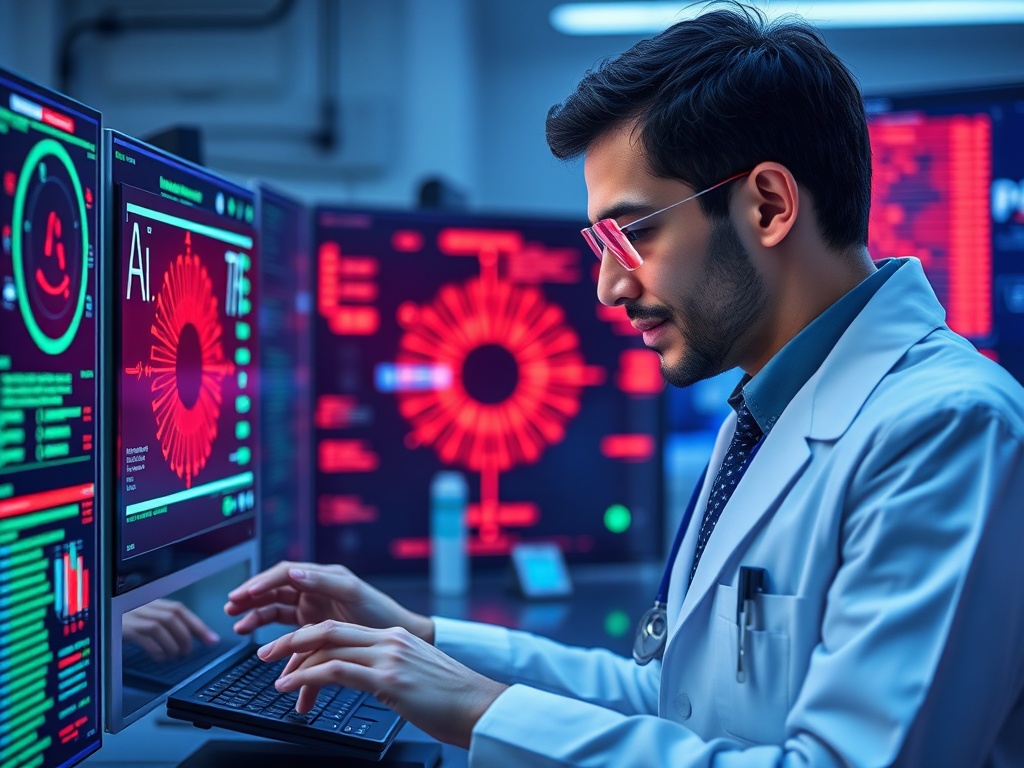
AI Transforming Healthcare Diagnostics
The healthcare landscape is undergoing a profound metamorphosis, driven significantly by the relentless march of artificial intelligence. Once relegated to the realm of science fiction, AI is now actively reshaping how we approach disease detection, diagnosis, and treatment. The complexities of human biology and the sheer volume of medical data have long presented formidable challenges, but AI offers unprecedented capabilities to sift through this information, identify subtle patterns, and provide insights that were previously unattainable. This paradigm shift in healthcare diagnostics promises not only increased accuracy and efficiency but also the potential for earlier intervention, more personalized care, and ultimately, improved patient outcomes globally. From interpreting complex medical images to predicting disease trajectories, AI is no longer just an aid; it's becoming an indispensable partner in the diagnostic journey, heralding a new era of medical precision.
The Dawn of Precision: Early Detection and Personalized Medicine
One of the most profound impacts of artificial intelligence in healthcare diagnostics lies in its ability to facilitate earlier and more accurate disease detection. Traditional diagnostic methods, while foundational, can sometimes be limited by the sheer volume of data, the subtlety of early disease markers, or the inherent variability in human interpretation. AI algorithms, particularly those leveraging deep learning, excel at identifying minute anomalies in vast datasets—whether it's a nascent tumor in a complex radiological scan or a faint biomarker signature in genomic data. This capability means diseases like cancer, Alzheimer's, or cardiovascular conditions can be identified at stages where interventions are far more effective, dramatically improving prognosis and survival rates. Furthermore, AI's ability to integrate diverse data types—from patient history and genetic information to lifestyle factors and real-time physiological data—is paving the way for truly personalized medicine. By analyzing individual patient profiles, AI can predict an individual's susceptibility to certain conditions, recommend tailored screening protocols, and even forecast a patient's response to specific treatments, moving healthcare from a reactive model to a proactive, highly individualized approach. This level of precision ensures that treatments are not only effective but also optimized for each unique patient, minimizing side effects and maximizing therapeutic benefits.
Core AI Technologies Powering Diagnostic Breakthroughs
The transformative power of AI in diagnostics is not a monolithic phenomenon but rather the synergistic application of several core artificial intelligence technologies. Each branch brings unique capabilities to the table, contributing to a comprehensive and robust diagnostic framework that can tackle the multifaceted challenges of modern medicine. From pattern recognition in vast datasets to understanding the nuances of clinical language, these technologies are the building blocks of the AI revolution in healthcare. Their combined strength allows for a more holistic and accurate understanding of patient conditions, pushing the boundaries of what is diagnostically possible and empowering clinicians with tools to make more informed decisions rapidly.
- Machine Learning (ML): At the heart of many AI diagnostic tools, machine learning algorithms are trained on enormous datasets of patient information, including medical images, laboratory results, and electronic health records. They learn to identify patterns and correlations that might be imperceptible to the human eye, enabling them to predict disease risk, classify conditions, and even assist in drug discovery. ML models are continuously refined with new data, improving their accuracy over time.
- Deep Learning (DL): A specialized subset of machine learning, deep learning utilizes artificial neural networks with multiple layers to process complex data. DL is particularly adept at image and signal processing, making it invaluable for analyzing medical scans (X-rays, MRIs, CTs) and pathological slides. Its ability to extract hierarchical features directly from raw data has led to breakthroughs in detecting subtle abnormalities in oncology and ophthalmology, often surpassing human capabilities in speed and consistency.
- Natural Language Processing (NLP): NLP allows AI systems to understand, interpret, and generate human language. In diagnostics, NLP is crucial for extracting valuable insights from unstructured text data found in clinical notes, discharge summaries, research papers, and patient narratives. It can identify key symptoms, medical histories, and treatment responses, helping to synthesize comprehensive patient profiles and support differential diagnoses, thereby reducing the burden of manual data review.
- Computer Vision: This field enables computers to "see" and interpret visual information from the real world. In healthcare, computer vision systems are deployed to analyze various medical images, from microscopic tissue samples to macroscopic radiological scans. They can automatically segment organs, detect lesions, quantify disease progression, and even assist in surgical planning. Its precision and speed in image analysis significantly enhance the diagnostic workflow, ensuring consistent and objective evaluations.
Revolutionizing Imaging and Pathology: A New Era of Accuracy
The fields of medical imaging and pathology, long the cornerstones of diagnostic medicine, are experiencing an unprecedented transformation thanks to artificial intelligence. These disciplines, which rely heavily on the visual interpretation of complex data, are particularly fertile ground for AI applications. In radiology, AI algorithms are being trained on millions of medical images—X-rays, MRIs, CT scans, and ultrasounds—to identify patterns indicative of various diseases. For instance, AI can quickly and accurately detect subtle abnormalities in mammograms that might suggest early-stage breast cancer, or pinpoint tiny nodules in lung CTs that could indicate lung cancer, often before they become apparent to the human eye. This capability significantly reduces the rate of missed diagnoses and false positives, improving patient outcomes and alleviating the workload on radiologists. Similarly, in pathology, AI is revolutionizing the analysis of tissue samples. Pathologists traditionally examine biopsy slides under a microscope, a meticulous and time-consuming process. AI-powered image analysis tools can automatically scan entire digital slides, identify diseased cells, quantify their characteristics, and even predict disease aggressiveness. For example, AI can accurately grade prostate cancer or identify metastatic cells in lymph nodes with remarkable speed and consistency. This not only enhances diagnostic accuracy but also standardizes the assessment process, reducing inter-observer variability. Importantly, AI in these contexts serves as an invaluable assistant, augmenting the expertise of human specialists rather than replacing them, allowing clinicians to focus on complex cases and patient interaction while AI handles the high-volume, repetitive tasks with unparalleled precision.
Predictive Analytics and Proactive Healthcare: Beyond Diagnosis
Artificial intelligence is pushing the boundaries of healthcare beyond mere diagnosis of current conditions, venturing into the realm of predictive analytics to enable truly proactive healthcare. This paradigm shift involves using AI to forecast future health risks, identify populations most vulnerable to specific diseases, and even predict the onset or progression of chronic conditions long before symptoms manifest. By analyzing vast repositories of patient data—including genetic predispositions, lifestyle factors, environmental exposures, and historical medical records—AI algorithms can construct sophisticated predictive models. These models can identify individuals at high risk for developing conditions like diabetes, heart disease, or certain cancers years in advance, allowing for early lifestyle interventions, targeted screenings, and preventative treatments. For example, AI can predict which patients are likely to develop sepsis in an intensive care unit, giving clinicians a critical window to intervene. Furthermore, AI's predictive capabilities extend to public health, where it can analyze epidemiological data, social media trends, and environmental factors to forecast disease outbreaks, such as influenza or COVID-19 surges, enabling health authorities to allocate resources effectively and implement preventative measures in a timely manner. This proactive approach not only saves lives but also reduces the overall burden on healthcare systems by mitigating the need for costly and complex treatments later on. The integration of AI-driven predictive analytics is fundamentally transforming healthcare from a reactive system focused on treating illness to a preventive model centered on maintaining wellness and preventing disease before it takes hold, heralding a future of healthier communities.
Navigating the Future: Challenges and Ethical Imperatives in AI Diagnostics
While the transformative potential of AI in healthcare diagnostics is undeniable, its widespread adoption is not without significant challenges and critical ethical considerations that must be meticulously addressed. One primary concern revolves around data privacy and security. AI systems thrive on vast amounts of sensitive patient data, necessitating robust cybersecurity measures and stringent regulatory frameworks to prevent breaches and misuse. Ensuring patient trust requires transparency in how data is collected, stored, and utilized. Another crucial challenge is algorithmic bias. If AI models are trained on datasets that do not accurately represent the diversity of the patient population—for instance, if they predominantly feature data from certain demographics—they may exhibit biases that lead to inaccurate or inequitable diagnoses for underrepresented groups. This could exacerbate existing health disparities, underscoring the need for diverse, high-quality, and carefully curated training data. The "black box" nature of some deep learning models, where the decision-making process is opaque, also presents an obstacle. Clinicians need to understand *why* an AI system arrived at a particular diagnosis to trust and integrate it into practice, driving the demand for explainable AI (XAI). Regulatory hurdles are also significant; establishing clear guidelines for the validation, approval, and ongoing monitoring of AI-powered diagnostic tools is essential to ensure their safety and efficacy. Finally, the integration of AI into clinical workflows requires significant investment in infrastructure, training for healthcare professionals, and a shift in mindset. Addressing these challenges through collaborative efforts among technologists, clinicians, policymakers, and ethicists is paramount to harness AI's full potential responsibly and ethically, ensuring that its benefits are equitably distributed across all populations.
Conclusion
Artificial intelligence is undeniably revolutionizing healthcare diagnostics, ushering in an era of unprecedented precision, efficiency, and personalization. From enhancing early disease detection through advanced image analysis and pathology to enabling proactive healthcare via sophisticated predictive analytics, AI is transforming how we understand, identify, and manage health conditions. While challenges related to data privacy, algorithmic bias, and regulatory frameworks persist, ongoing research and collaborative efforts are actively addressing these concerns to ensure responsible and ethical deployment. The future of healthcare diagnostics will increasingly rely on AI as an indispensable partner, empowering clinicians with tools to deliver more accurate diagnoses, tailor treatments, and ultimately improve patient outcomes on a global scale. As these technologies continue to evolve, their integration promises a healthier, more proactive future for humanity. Explore more AI insights and stay tuned for the latest advancements shaping the future of medicine.
[AI transforming healthcare diagnostics with machine learning, deep learning, and predictive analytics for early detection and personalized medicine.]


Aucun commentaire:
Enregistrer un commentaire