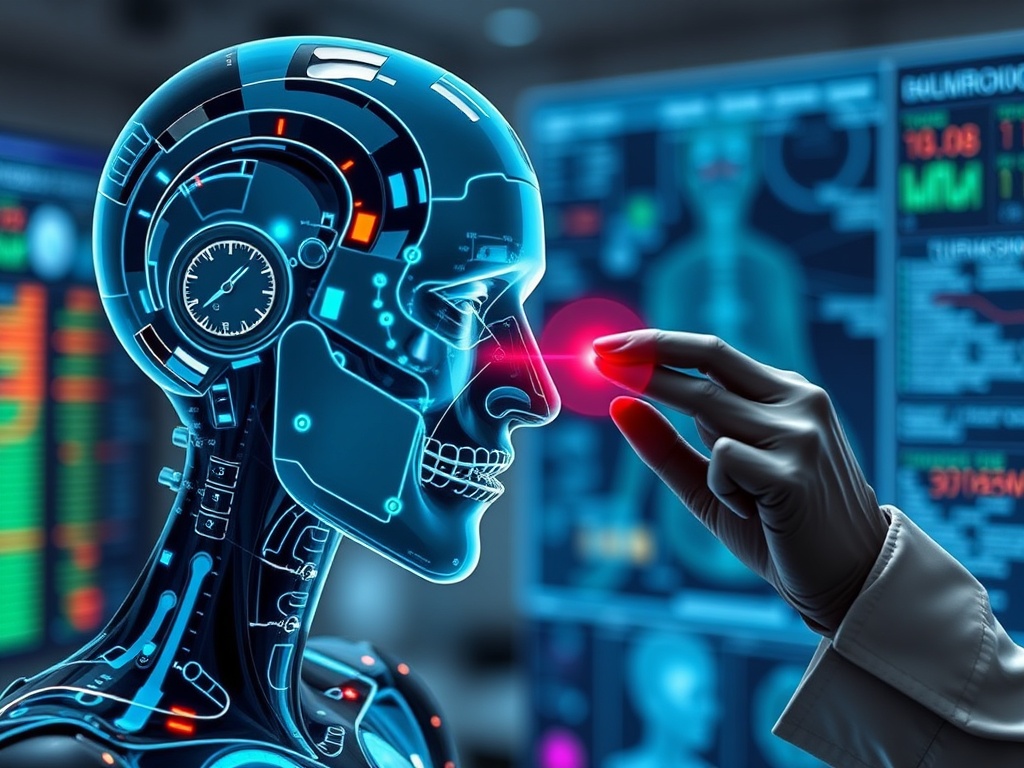
AI Transforming Healthcare Diagnostics: A New Era of Precision and Early Detection
Artificial intelligence (AI) is rapidly emerging as a revolutionary force in healthcare, fundamentally reshaping how diseases are diagnosed, treated, and understood. From deciphering complex medical images to predicting disease outbreaks and personalizing treatment plans, AI's analytical prowess is enhancing clinical accuracy and efficiency. This technological leap promises to alleviate the burden on healthcare professionals, improve patient outcomes, and usher in an era of unprecedented diagnostic precision. As AI systems become more sophisticated, their integration into diagnostic workflows is not merely an improvement but a complete paradigm shift, making healthcare more proactive, accessible, and tailored to individual needs.
The Urgent Need for Diagnostic Revolution
The current landscape of healthcare diagnostics, while advanced, faces significant challenges that often impede timely and accurate patient care. Human error, variability in interpretation among clinicians, the sheer volume of data, and the increasing complexity of diseases contribute to diagnostic delays and misdiagnoses. Radiologists and pathologists, for instance, are often overwhelmed by vast numbers of images and slides, leading to fatigue and potential oversights. Furthermore, many diagnostic tests are invasive, expensive, or require specialized equipment not readily available in all regions. This creates disparities in access and quality of care. The imperative for a diagnostic revolution stems from the need to overcome these limitations, reduce healthcare costs, improve patient safety, and ensure equitable access to high-quality diagnostics globally. AI offers a compelling solution by providing tools that can augment human capabilities, automate repetitive tasks, and uncover insights hidden within massive datasets, thereby addressing these critical bottlenecks in the diagnostic process.
AI's Foundational Impact: Beyond Human Perception
Artificial intelligence, particularly machine learning and deep learning, brings capabilities to healthcare diagnostics that extend far beyond human perceptual limits. AI algorithms can process, analyze, and interpret colossal volumes of data with unparalleled speed and accuracy, identifying subtle patterns and anomalies that might be imperceptible to the human eye or mind. This capacity to sift through petabytes of information, from medical images to genomic sequences, allows for a more comprehensive and objective assessment of patient conditions. AI models are trained on vast datasets of healthy and diseased samples, enabling them to learn distinguishing features and make highly informed predictions. This foundational impact is not about replacing human expertise but augmenting it, providing clinicians with powerful tools to enhance their diagnostic precision and efficiency. The integration of AI allows for a level of detail and consistency previously unattainable, promising a future where diagnostics are more robust and reliable.
- Image Recognition & Analysis: AI excels at analyzing medical images such as X-rays, MRIs, CT scans, and pathology slides. Deep learning models can detect cancerous lesions, fractures, or early signs of diseases like retinopathy with accuracy sometimes surpassing human experts, reducing false positives and negatives.
- Predictive Analytics: Leveraging patient data, electronic health records (EHRs), and population health information, AI can predict disease risk, identify individuals prone to specific conditions, or even forecast disease outbreaks, enabling proactive interventions and preventive care strategies.
- Natural Language Processing (NLP): NLP algorithms can extract crucial information from unstructured clinical notes, research papers, and patient narratives within EHRs, identifying symptoms, diagnoses, and treatment responses, which streamlines data analysis and clinical decision-making.
- Genomics & Proteomics: AI plays a pivotal role in analyzing complex genomic and proteomic data. It can identify genetic markers for predispositions to diseases, predict drug responses, and uncover novel biomarkers, paving the way for highly personalized medicine and targeted therapies.
Early Disease Detection: A New Frontier
One of the most profound impacts of AI in healthcare diagnostics is its ability to facilitate earlier and more accurate disease detection. Many diseases, particularly cancers and chronic conditions, have significantly better prognoses when identified in their nascent stages. AI algorithms, trained on extensive datasets of patient information, can detect subtle indicators and anomalies that might be missed during conventional screenings or human review. For instance, in radiology, AI can flag suspicious areas on mammograms or lung CT scans that might be too small or obscure for the human eye to consistently identify, prompting earlier follow-up and intervention. Similarly, in ophthalmology, AI systems can analyze retinal images to detect early signs of diabetic retinopathy or glaucoma, often before symptoms manifest. By enabling such proactive identification, AI not only improves treatment outcomes but also significantly enhances the quality of life for patients, reducing the progression of severe illness and the need for more aggressive treatments later on. This shift towards ultra-early detection represents a critical frontier in preventative healthcare, powered by AI's superior pattern recognition capabilities.
Precision Medicine and Personalized Treatment Pathways
The promise of precision medicine—tailoring medical treatment to the individual characteristics of each patient—is being significantly accelerated by AI. Traditional diagnostic approaches often rely on generalized protocols that may not be optimally effective for every patient due to genetic variations, lifestyle differences, or unique disease presentations. AI algorithms, however, can process and integrate a vast array of patient-specific data, including genomic information, proteomic profiles, electronic health records, imaging data, and even real-time physiological monitoring. By analyzing these complex datasets, AI can identify specific biomarkers, predict individual responses to various drugs, and stratify patients into more precise risk categories. This capability allows clinicians to move beyond a one-size-fits-all approach, enabling the development of highly personalized treatment pathways. For example, in oncology, AI can help select the most effective chemotherapy regimen or targeted therapy based on a tumor’s specific genetic mutations, minimizing adverse effects and maximizing therapeutic efficacy. The result is more effective treatments, reduced trial-and-error, and ultimately, better patient outcomes tailored to their unique biological makeup and disease characteristics.
Challenges, Ethics, and the Future Outlook
While the transformative potential of AI in healthcare diagnostics is immense, its widespread adoption is not without challenges. Data privacy and security remain paramount concerns, as AI systems often require access to sensitive patient information. Robust regulatory frameworks are essential to ensure ethical data handling and algorithmic accountability. The potential for algorithmic bias, where AI models trained on unrepresentative datasets might perpetuate or exacerbate existing health disparities, also needs careful consideration and mitigation. Furthermore, the integration of AI tools into existing clinical workflows requires significant infrastructure investment, interoperability standards, and comprehensive training for healthcare professionals. Despite these hurdles, the future outlook for AI in diagnostics is incredibly promising. Continued advancements in machine learning, coupled with increasing data availability and computational power, will lead to even more sophisticated and reliable AI applications. We can anticipate AI assisting in the diagnosis of rare diseases, monitoring chronic conditions through wearables, and even developing novel diagnostic tests. Collaboration between AI developers, clinicians, policymakers, and patients will be crucial to navigate these complexities and fully realize AI's potential to revolutionize healthcare diagnostics for the benefit of all.
Conclusion
The integration of artificial intelligence into healthcare diagnostics marks a pivotal moment in medical history. By enhancing the speed, accuracy, and personalized nature of disease detection, AI is not just improving existing processes but fundamentally redefining them. From uncovering subtle anomalies in medical images to predicting individual responses to therapies and facilitating earlier interventions, AI promises to make healthcare more efficient, precise, and ultimately, more effective. While challenges related to data privacy, ethical considerations, and seamless integration persist, the relentless pace of innovation suggests these will be overcome. The future of healthcare diagnostics, powered by AI, envisions a world where diseases are caught earlier, treatments are tailored precisely, and every patient receives the most accurate and personalized care possible. Embrace the future; explore how AI Insights is at the forefront of this diagnostic revolution.



Aucun commentaire:
Enregistrer un commentaire