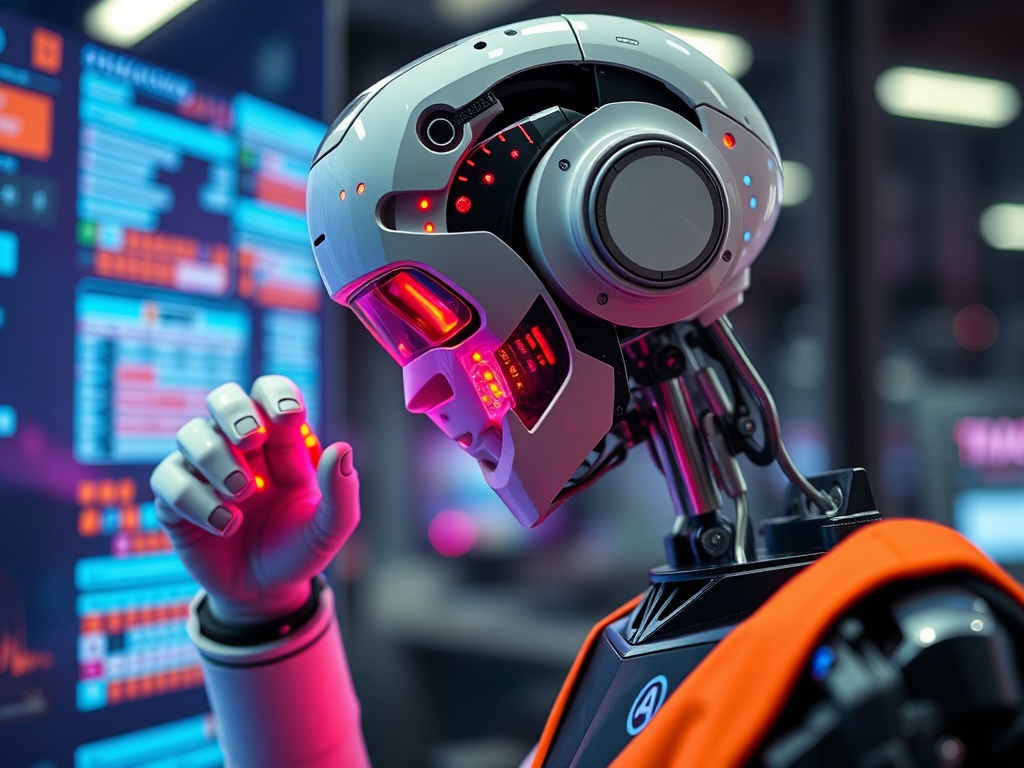
AI Impact on Jobs Automation: Reshaping the Global Workforce
Artificial intelligence, machine learning, and deep learning are no longer concepts confined to science fiction; they are integral components of our rapidly evolving technological landscape. As these advanced systems become more sophisticated and pervasive, a critical conversation has emerged regarding their profound impact on employment. The advent of AI-driven automation presents both unprecedented opportunities for productivity and innovation, alongside significant anxieties about job displacement and the fundamental restructuring of the global workforce. Understanding this dual nature is crucial for individuals, businesses, and policymakers preparing for an AI-powered future.
The Automation Imperative: Understanding AI's Core Function in the Workplace
At its heart, AI's primary function in the workplace revolves around automation – the ability to perform tasks with minimal human intervention. This imperative is driven by several key factors: efficiency, cost reduction, and enhanced accuracy. Artificial intelligence excels at processing vast datasets, identifying patterns, and executing repetitive, rule-based tasks at speeds and scales unattainable by human labor. From robotic process automation (RPA) handling administrative duties to advanced manufacturing robots assembling complex products, AI is streamlining operations across industries. This transformation isn't just about replacing manual labor; it extends to automating cognitive tasks, such as data analysis, predictive modeling, and even aspects of customer service through intelligent chatbots. The relentless pursuit of operational excellence and competitive advantage ensures that the integration of AI for automation will continue to accelerate, fundamentally altering how businesses operate and how work is performed on a day-to-day basis.
Job Displacement: Which Sectors Are Most Vulnerable?
While AI promises immense benefits, the concern about job displacement is legitimate and demands careful consideration. Certain sectors and job roles, particularly those characterized by repetitive, predictable, and data-intensive tasks, are demonstrably more vulnerable to automation. Manufacturing, logistics, and administrative support roles have already seen significant shifts due to robotics and intelligent automation. Entry-level data analysis and basic customer service positions are increasingly being augmented or replaced by machine learning algorithms and sophisticated chatbots. The economic rationale for automating such roles—reducing labor costs, increasing speed, and minimizing human error—is compelling for businesses. However, this also necessitates a proactive approach to workforce planning, reskilling, and social safety nets to mitigate the adverse effects on displaced workers and ensure a just transition into the AI-powered economy.
- Repetitive Manual Labor: Jobs involving highly repetitive physical tasks, such as assembly line work, packaging, and basic agricultural tasks, are prime candidates for robotic automation, significantly impacting manufacturing and logistics.
- Data Entry and Administrative Tasks: Roles focused on data input, record keeping, scheduling, and other routine administrative functions can be largely automated by Robotic Process Automation (RPA) and intelligent software.
- Basic Customer Service and Support: Chatbots and AI-driven virtual assistants are increasingly handling common customer queries, technical support, and frontline interactions, reducing the demand for human agents in these capacities.
- Certain Analytical and Diagnostic Roles: While complex analysis remains human-centric, AI can perform initial data screening, pattern recognition in large datasets, and even provide preliminary diagnoses in fields like medicine, potentially impacting entry-level analytical positions.
Job Creation: The Emergence of New Roles in the AI Era
The narrative surrounding AI and jobs is not solely one of displacement; it is equally a story of creation. As AI technologies mature and become more integrated, an entirely new ecosystem of roles is emerging, demanding novel skill sets and expertise. These new positions are essential for the development, deployment, maintenance, and ethical governance of AI systems. We are seeing a surge in demand for AI engineers, machine learning specialists, data scientists, and prompt engineers who can effectively interact with and steer generative AI models. Beyond core technical roles, there's a growing need for AI ethicists to ensure fair and unbiased algorithms, AI trainers to refine model performance, and automation specialists to integrate AI solutions into existing business processes. This shift underscores a fundamental transformation in the labor market, where the emphasis moves from performing routine tasks to designing, managing, and leveraging intelligent systems, creating exciting career pathways for those willing to adapt and learn.
Job Transformation: Augmentation, Not Replacement
Perhaps the most widespread and nuanced impact of AI on jobs will be through transformation and augmentation rather than outright replacement. For many existing roles, AI will act as a powerful co-pilot, enhancing human capabilities and freeing individuals from mundane, time-consuming tasks to focus on higher-value activities. Consider the medical field, where AI assists doctors in diagnosing diseases more accurately by analyzing vast amounts of patient data and medical imagery. Lawyers utilize AI for rapid legal research and contract review, allowing them to dedicate more time to strategic thinking and client interaction. In marketing, AI personalizes customer experiences and optimizes campaigns, enabling human marketers to craft more creative and impactful strategies. This symbiotic relationship, often termed "human-AI collaboration," shifts the focus from task-oriented work to roles demanding critical thinking, creativity, emotional intelligence, and complex problem-solving. AI becomes a tool that amplifies human potential, making workers more productive, innovative, and engaged in their professions.
The Skills Revolution: Adapting to the AI-Powered Workforce
Navigating the AI-powered future of work necessitates a profound "skills revolution." The emphasis is shifting away from repetitive, easily automatable tasks towards uniquely human attributes and capacities. Critical thinking, complex problem-solving, creativity, and innovation are becoming paramount, as these are areas where human intelligence still far surpasses artificial intelligence. Emotional intelligence, collaboration, and cross-cultural communication are also increasingly valuable, as human interaction and teamwork remain essential in a technologically advanced environment. Furthermore, digital literacy and adaptability – the ability to quickly learn new tools, platforms, and AI applications – will be non-negotiable. Governments, educational institutions, and corporations must collaborate to provide robust upskilling and reskilling programs, ensuring that the current workforce gains the competencies required to thrive alongside AI. This continuous learning mindset, embracing lifelong education, will be the cornerstone of career resilience and success in the evolving labor market.
Conclusion
The impact of AI on jobs and automation is undeniably complex and multifaceted. While fears of widespread job displacement are valid and warrant careful consideration, it is equally important to acknowledge the immense potential for job creation, the augmentation of existing roles, and the overall transformation of the global workforce. The future is not a predetermined outcome but rather a dynamic interplay of technological advancement and human adaptation. To truly harness the benefits of artificial intelligence while mitigating its challenges, proactive strategies are essential. Investing in education, fostering lifelong learning, and developing robust social safety nets will be critical in ensuring a smooth and equitable transition. Embracing human-AI collaboration and focusing on uniquely human skills will empower individuals to thrive in this new era. Stay informed and explore more insights on AI’s evolving impact at AI Insights to prepare for tomorrow's opportunities.



Aucun commentaire:
Enregistrer un commentaire